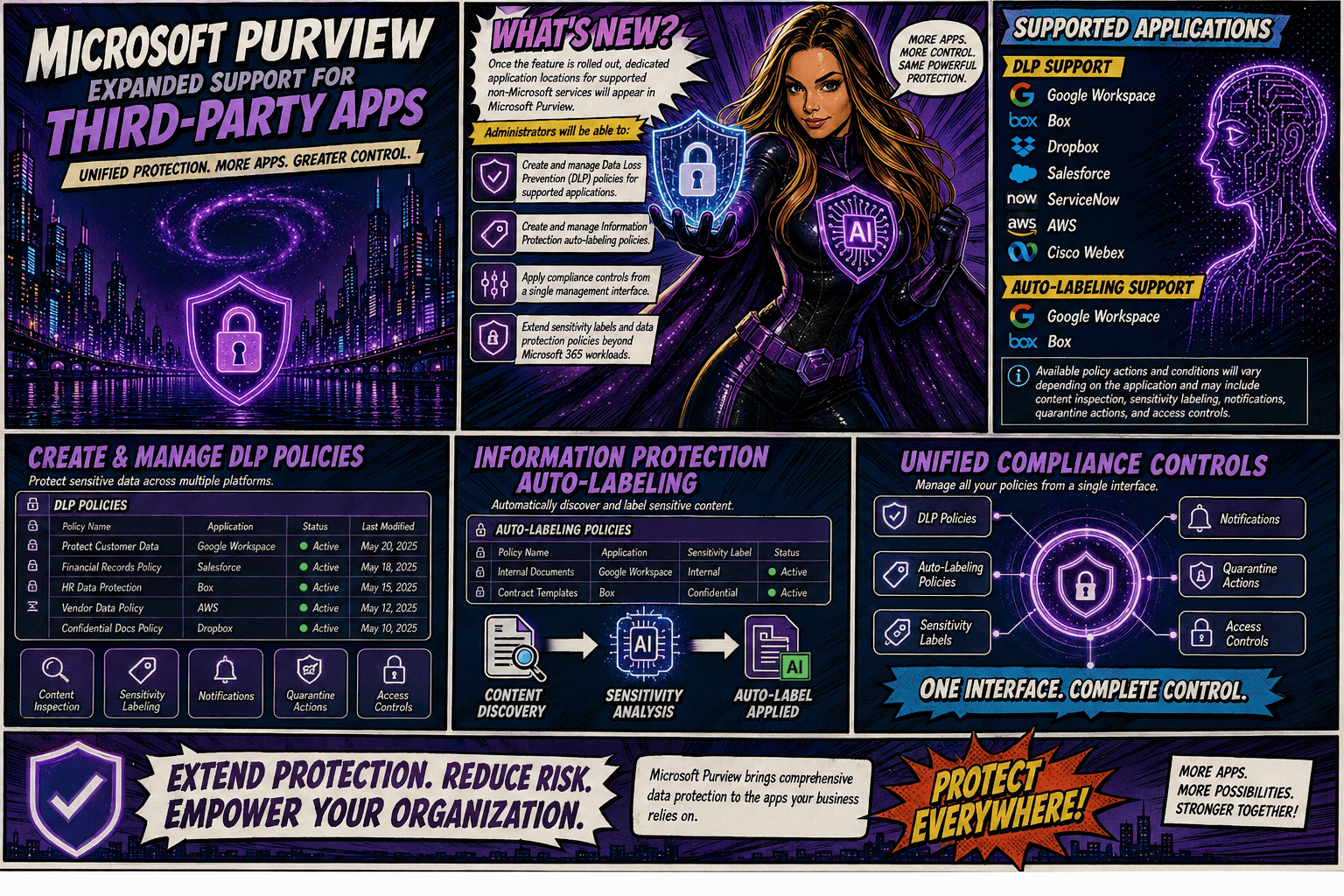
Microsoft is taking another major step toward unified data protection by extending Microsoft Purview Data Loss Prevention (DLP) and autolabeling capabilities beyond the Microsoft ecosystem. Organisations will soon be able to protect and classify data stored in popular third-party applications such as Google Workspace, Box, Salesforce, Dropbox, ServiceNow, AWS, and Cisco Webex, all from within Microsoft Purview.
A Single Compliance Hub for More Applications
Traditionally, organisations managing data across multiple cloud platforms had to rely on separate security and compliance controls for each application. With this update, Microsoft Purview becomes a more centralised compliance solution by allowing administrators to create and manage DLP and autolabeling policies for supported non-Microsoft applications directly from the Purview portal.
The integration is made possible through Microsoft Defender for Cloud Apps connectors, which securely connect these third-party services to Microsoft Purview.
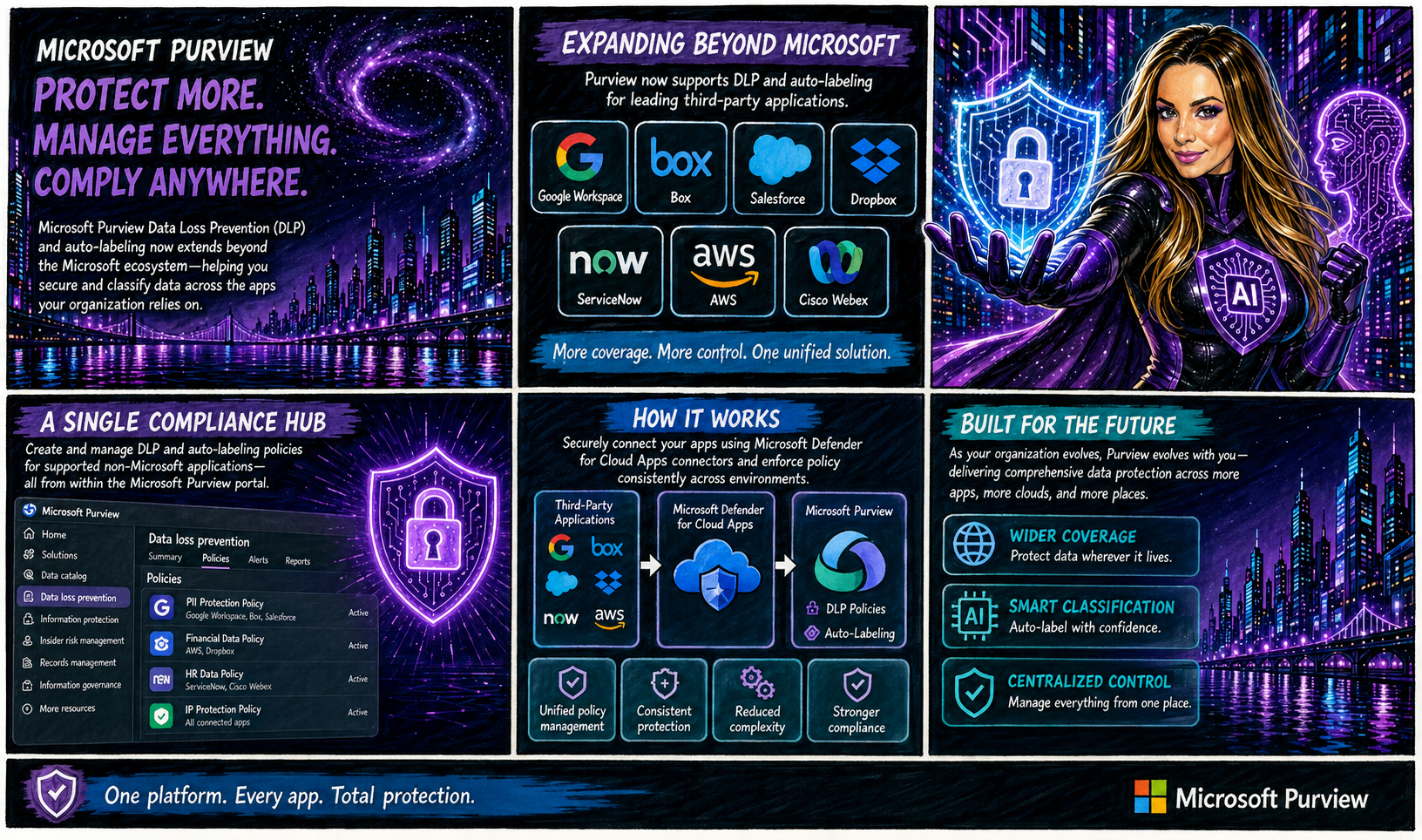
Once the feature is rolled out, dedicated application locations for supported non-Microsoft services will appear in Microsoft Purview. Administrators will be able to:
- Create and manage Data Loss Prevention (DLP) policies for supported applications.
- Create and manage Information Protection autolabeling policies.
- Apply compliance controls from a single management interface.
- Extend sensitivity labels and data protection policies beyond Microsoft 365 workloads.
Supported Applications
DLP Support
Microsoft Purview DLP will support the following applications:
- Google Workspace
- Box
- Dropbox
- Salesforce
- ServiceNow
- AWS
- Cisco Webex
AutoLabeling Support
Autolabeling will initially be available for:
- Google Workspace
- Box
Available policy actions and conditions will vary depending on the application and may include content inspection, sensitivity labelling, notifications, quarantine actions, and access controls.
Rollout Timeline
Microsoft plans to release the feature according to the following schedule:
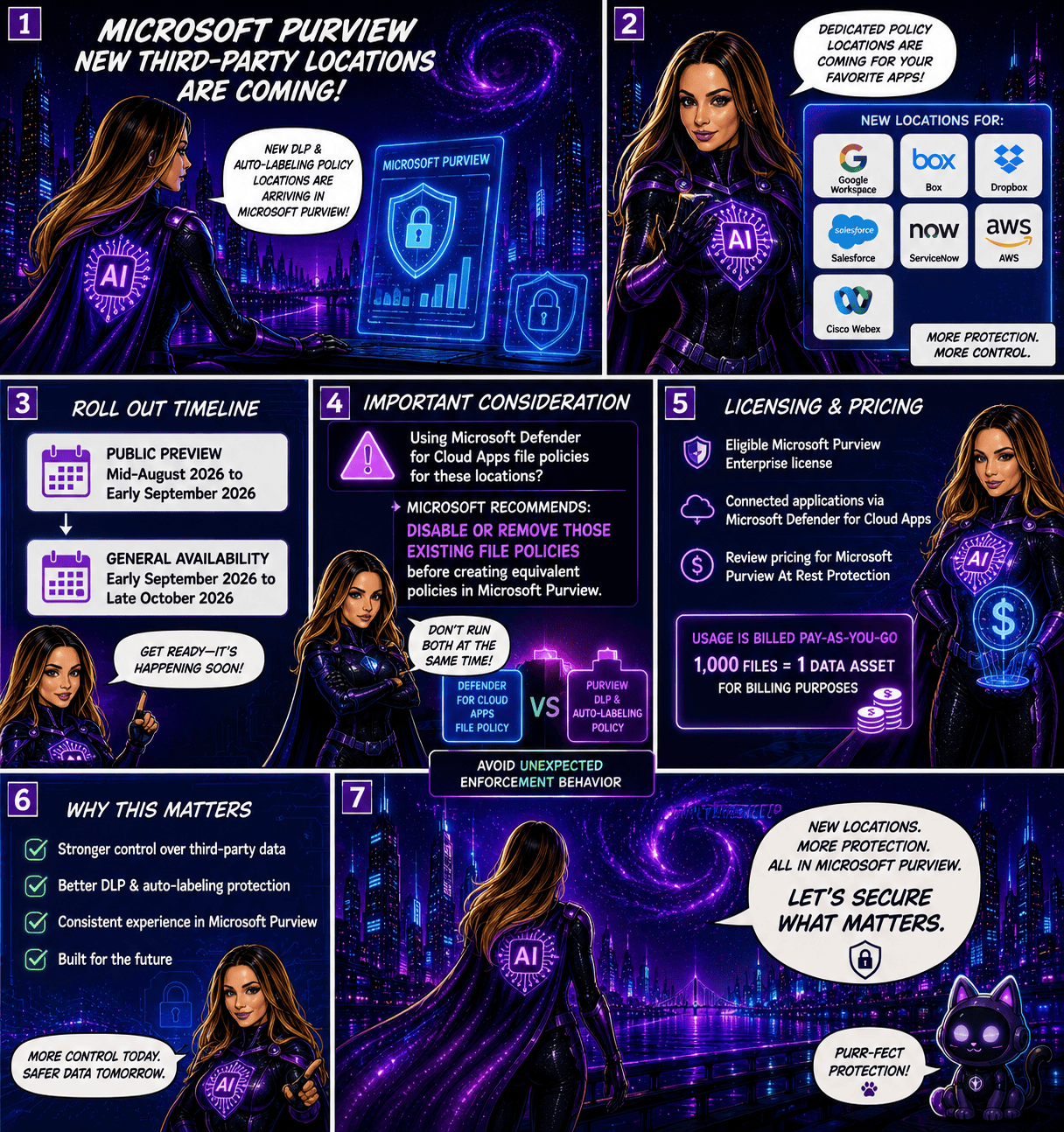
- Public Preview: Mid-August 2026 to early September 2026
- General Availability: Early September 2026 through late October 2026
Important Considerations
Organisations currently using Microsoft Defender for Cloud Apps file policies for the same third-party locations should take note: Microsoft recommends disabling or removing those existing file policies before creating equivalent policies in Microsoft Purview. Running both simultaneously could result in unexpected policy enforcement behaviour.
Licensing and Pricing
To use these new capabilities, organisations will need:
- An eligible Microsoft Purview Enterprise license
- Connected applications via Microsoft Defender for Cloud Apps
Additionally, customers should review the pricing implications associated with Microsoft Purview At Rest Protection. Usage is billed on a pay-as-you-go basis, with 1,000 files counted as one data asset for billing purposes.
Why This Matters
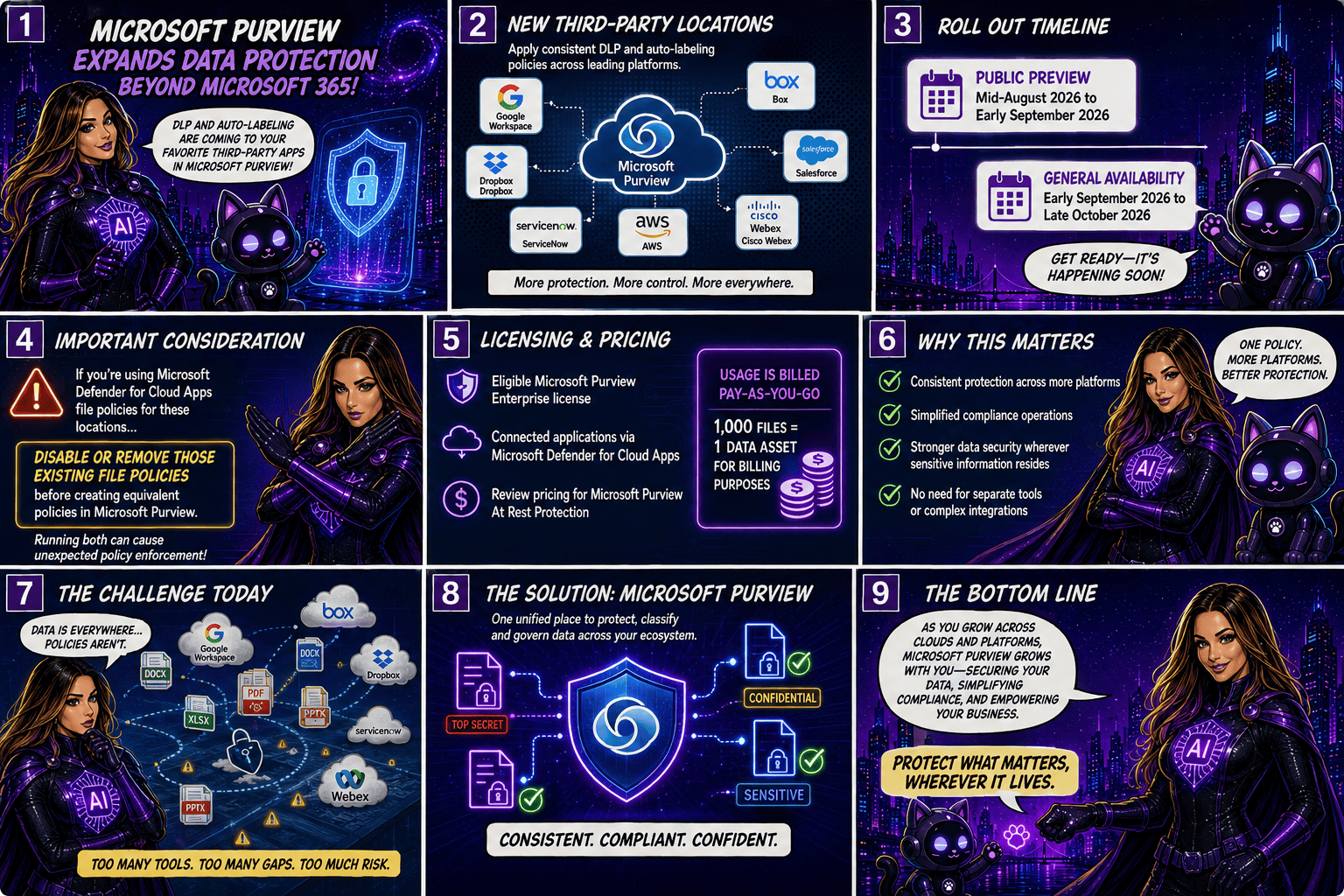
As organisations continue adopting multi-cloud and multi-platform environments, data often resides well beyond Microsoft 365. This update allows security and compliance teams to apply consistent protection, classification, and governance policies across a broader range of business-critical applications without requiring separate management tools.
By bringing DLP and autolabeling capabilities to leading third-party services, Microsoft is helping organisation simplify compliance operations while strengthening data security wherever sensitive information resides.
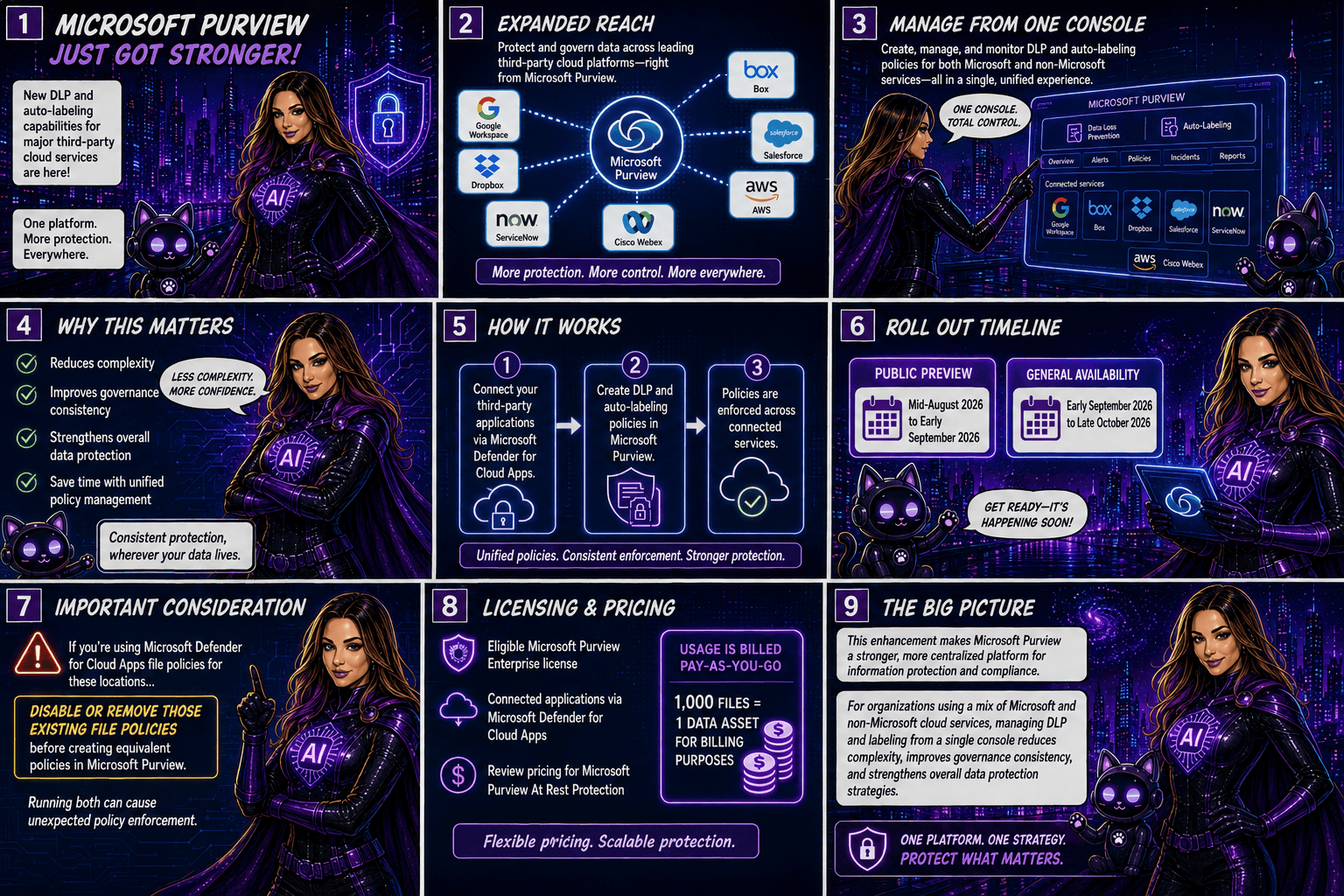
This enhancement significantly expands Microsoft Purview’s reach, making it a stronger centralised platform for information protection and compliance. For organisations using a mix of Microsoft and non-Microsoft cloud services, the ability to manage DLP and labeling policies from a single console could reduce complexity, improve governance consistency, and strengthen overall data protection strategies.
🎧 Tune in for all the details!
🎥 Watch the full episode ➡️ here