Microsoft Purview DLP Expands to Microsoft Cowork

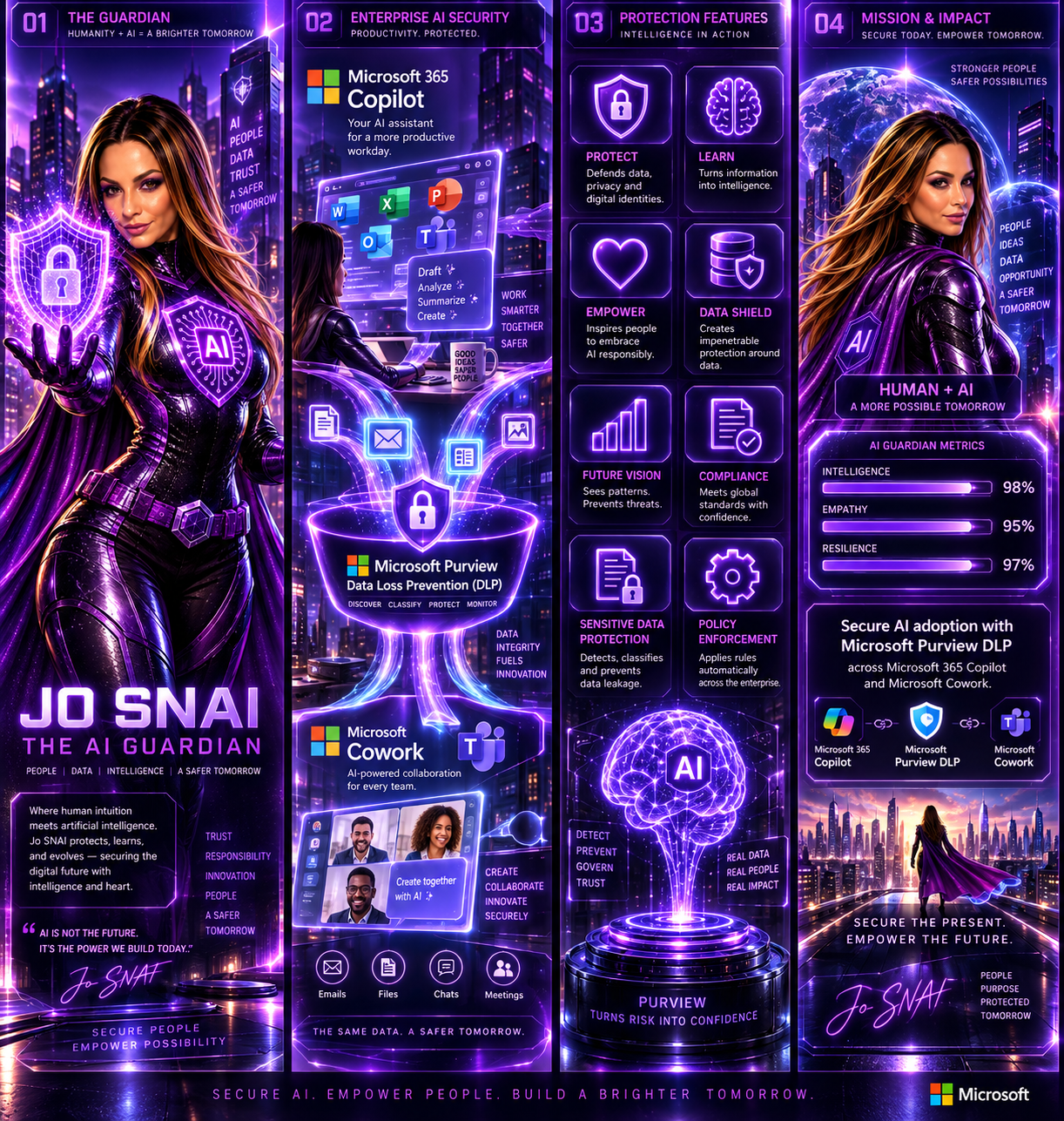
As organizations continue to embrace AI-powered productivity tools, maintaining strong data protection and compliance controls remains a top priority. To support the secure adoption of Microsoft Cowork, Microsoft is extending Microsoft Purview Data Loss Prevention (DLP) capabilities to this new AI experience, ensuring organizations can apply consistent data protection policies across both Microsoft 365 Copilot and Microsoft Cowork. This update helps organizations reduce the risk of sensitive information exposure while enabling employees to take advantage of AI-driven productivity tools with confidence.
 

What’s New?

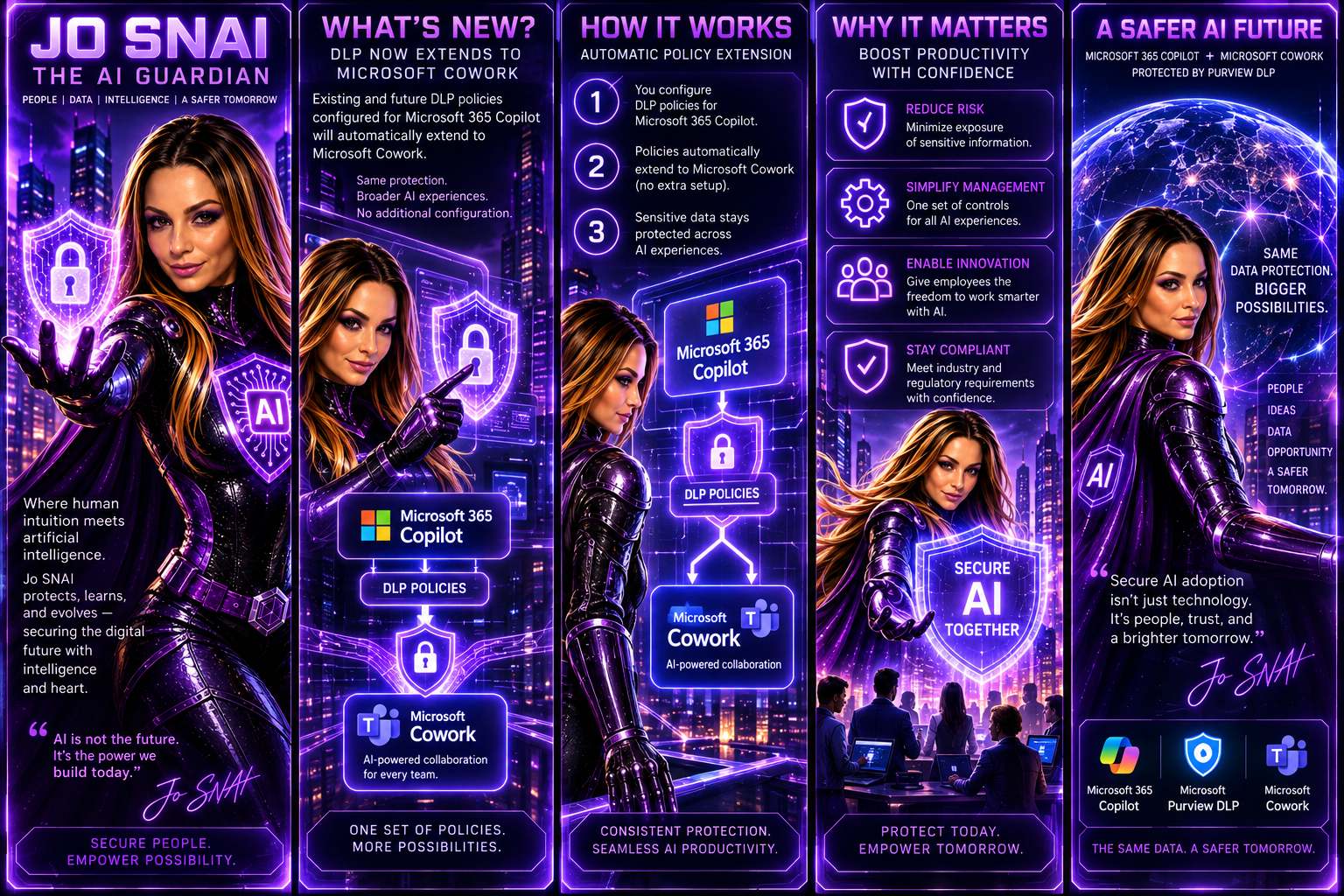
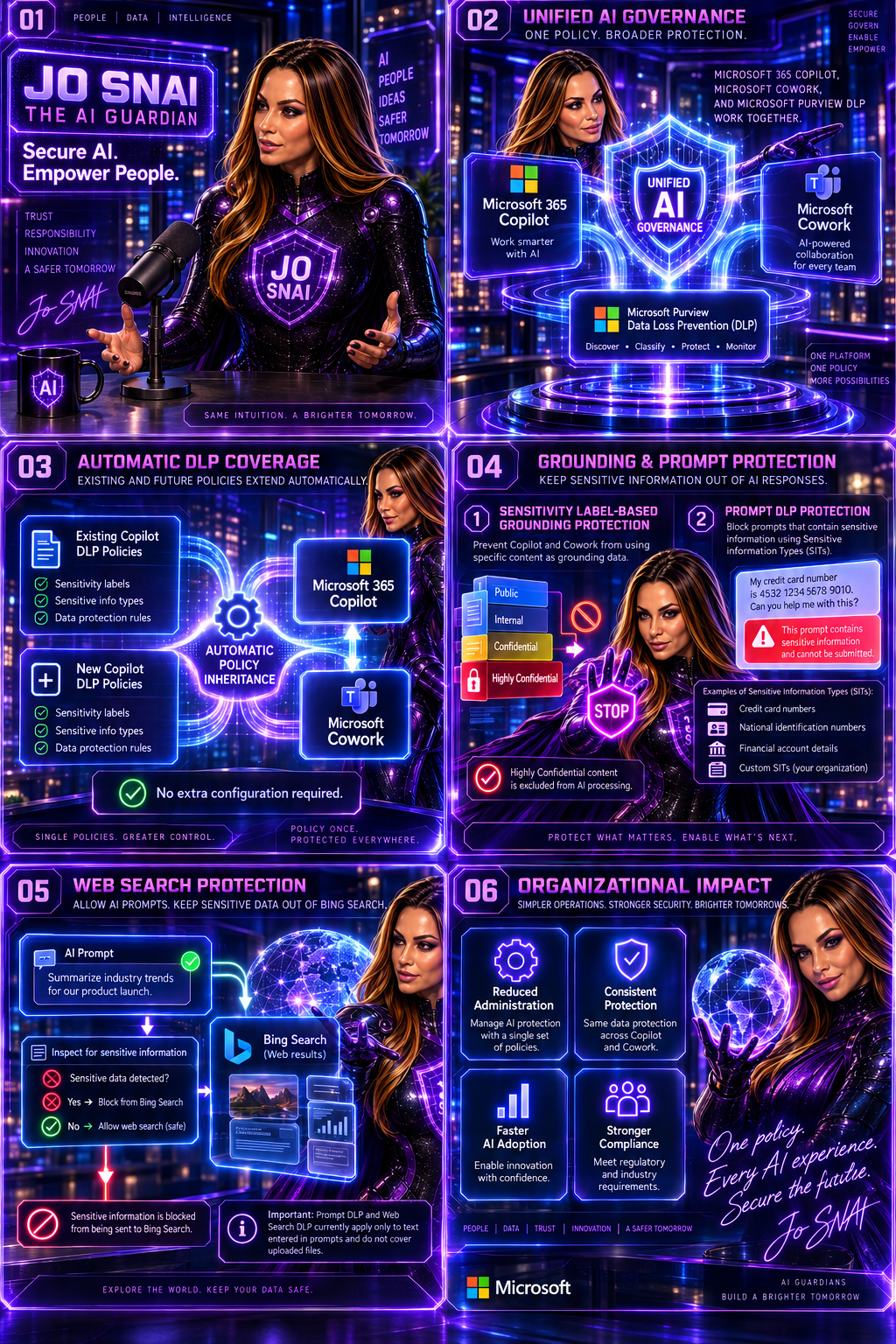
With this enhancement, existing and future DLP policies configured for Microsoft 365 Copilot will automatically extend to Microsoft Cowork. This means administrators can manage AI-related data protection through a single set of policies and controls without additional configuration.
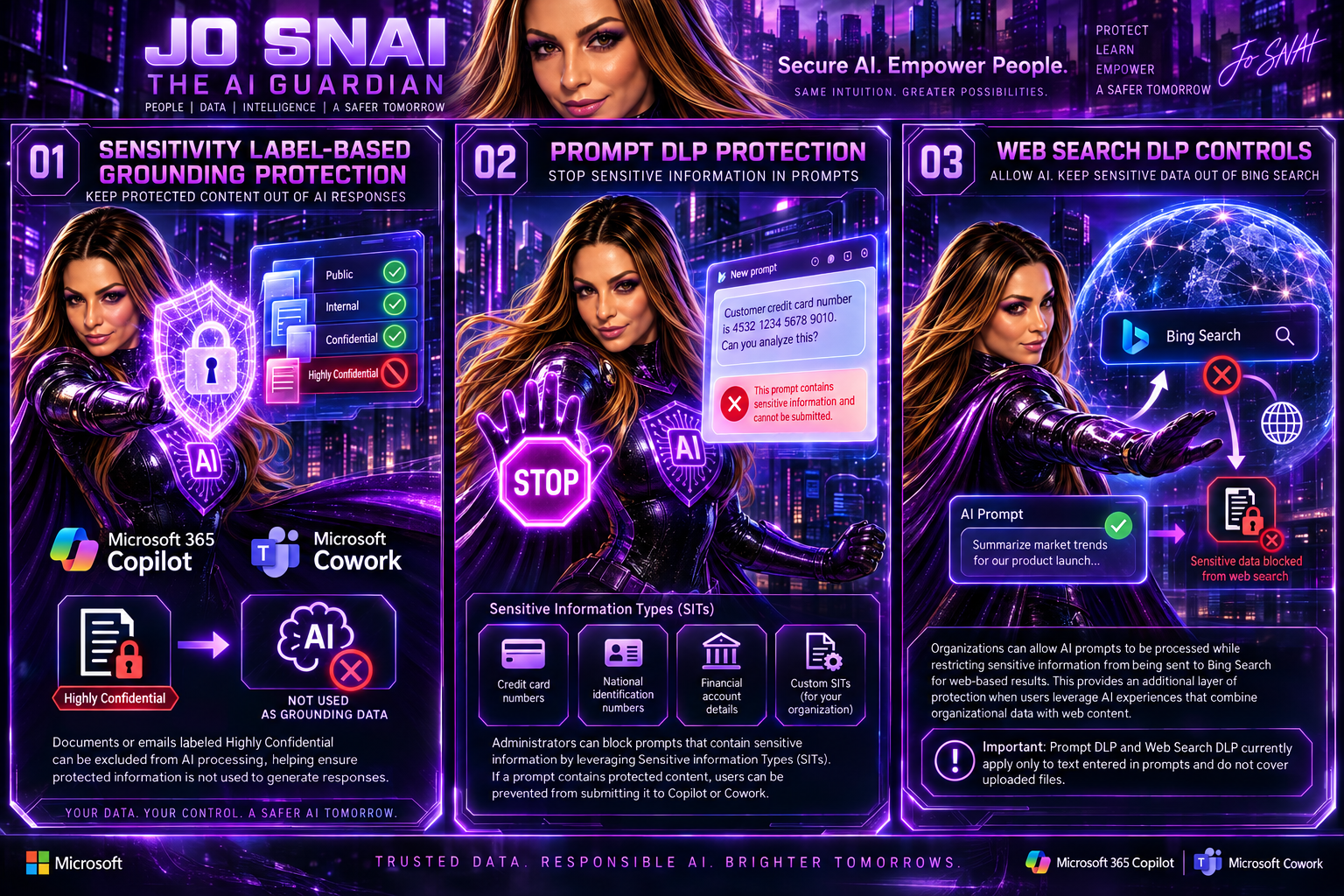
 

The following DLP capabilities will be supported:


1. Sensitivity Label-Based Grounding Protection

Organizations can prevent Microsoft Copilot and Microsoft Cowork from using specific content as grounding data when generating responses.

For example, documents or emails labeled Highly Confidential can be excluded from AI processing, helping ensure protected information is not used to generate responses.

2. Prompt DLP Protection

Administrators can block prompts that contain sensitive information by leveraging Sensitive Information Types (SITs).

Examples include:

  • Credit card numbers
  • National identification numbers
  • Financial account details
  • Custom Sensitive Information Types created by the organization

If a prompt contains protected content, users can be prevented from submitting it to Copilot or Cowork.

3. Web Search DLP Controls

Organizations can allow AI prompts to be processed while restricting sensitive information from being sent to Bing Search for web-based results.

This provides an additional layer of protection when users leverage AI experiences that combine organizational data with web content.

Important: Prompt DLP and Web Search DLP currently apply only to text entered in prompts and do not cover uploaded files.
 

What This Means for Organizations

The update simplifies AI governance by automatically extending protection to Microsoft Cowork.

Key changes include:

  • Existing DLP policies targeting Microsoft Copilot will automatically apply to Microsoft Cowork.
  • New DLP policies created for Microsoft Copilot will include Microsoft Cowork by default.
  • Sensitivity labels can be used to prevent protected content from being used as grounding data.
  • Sensitive Information Types can be used to block prompts or restrict sensitive information from being sent for web searches.
  • No separate setup or configuration is required.

For organizations already using Microsoft Purview DLP, this significantly reduces the effort required to secure emerging AI workloads.


Rollout Timeline

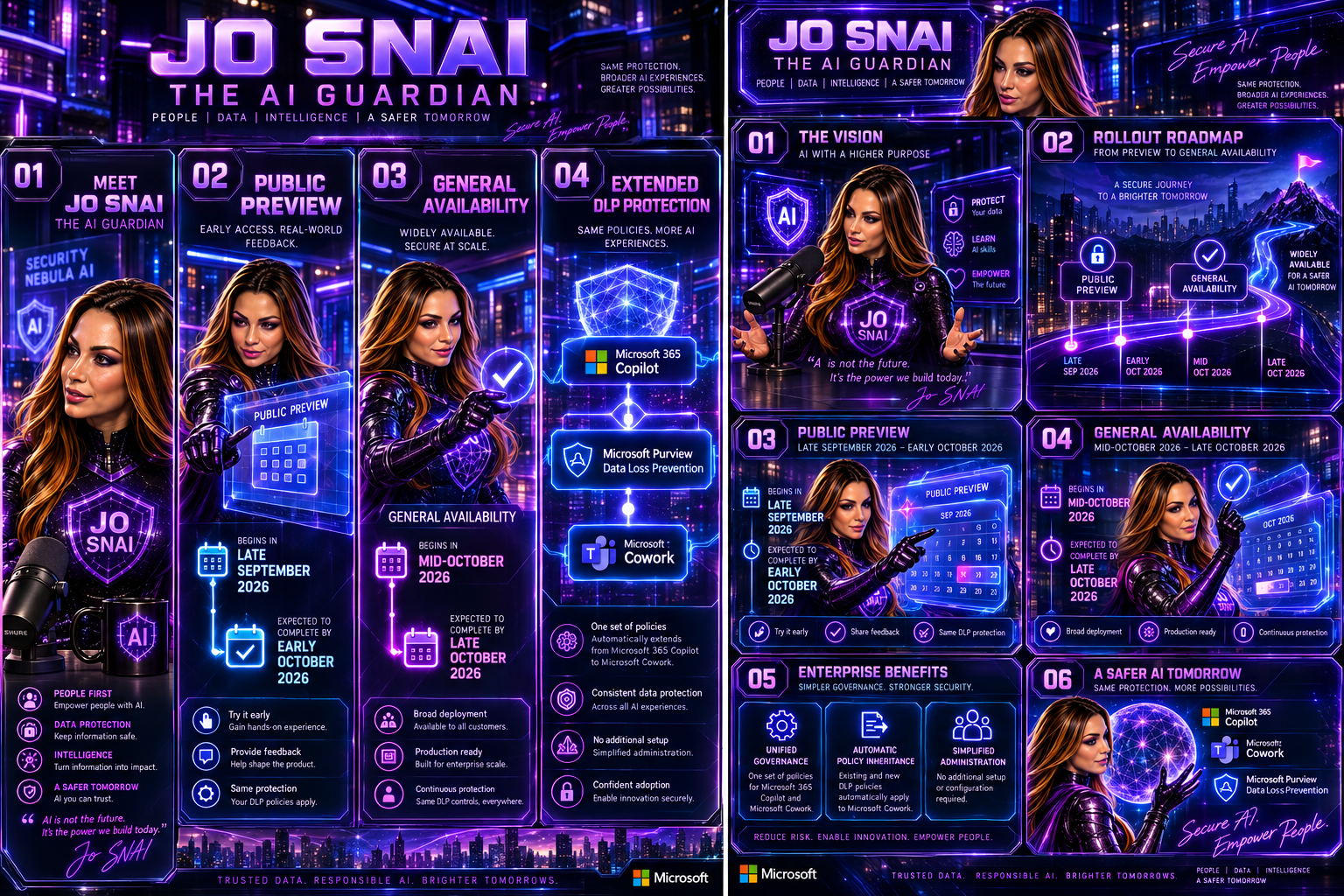
Public Preview

  • Begins in late September 2026
  • Expected to complete by early October 2026


General Availability

  • Begins in mid-October 2026
  • Expected to complete by late October 2026
 

What Should Administrators Do?

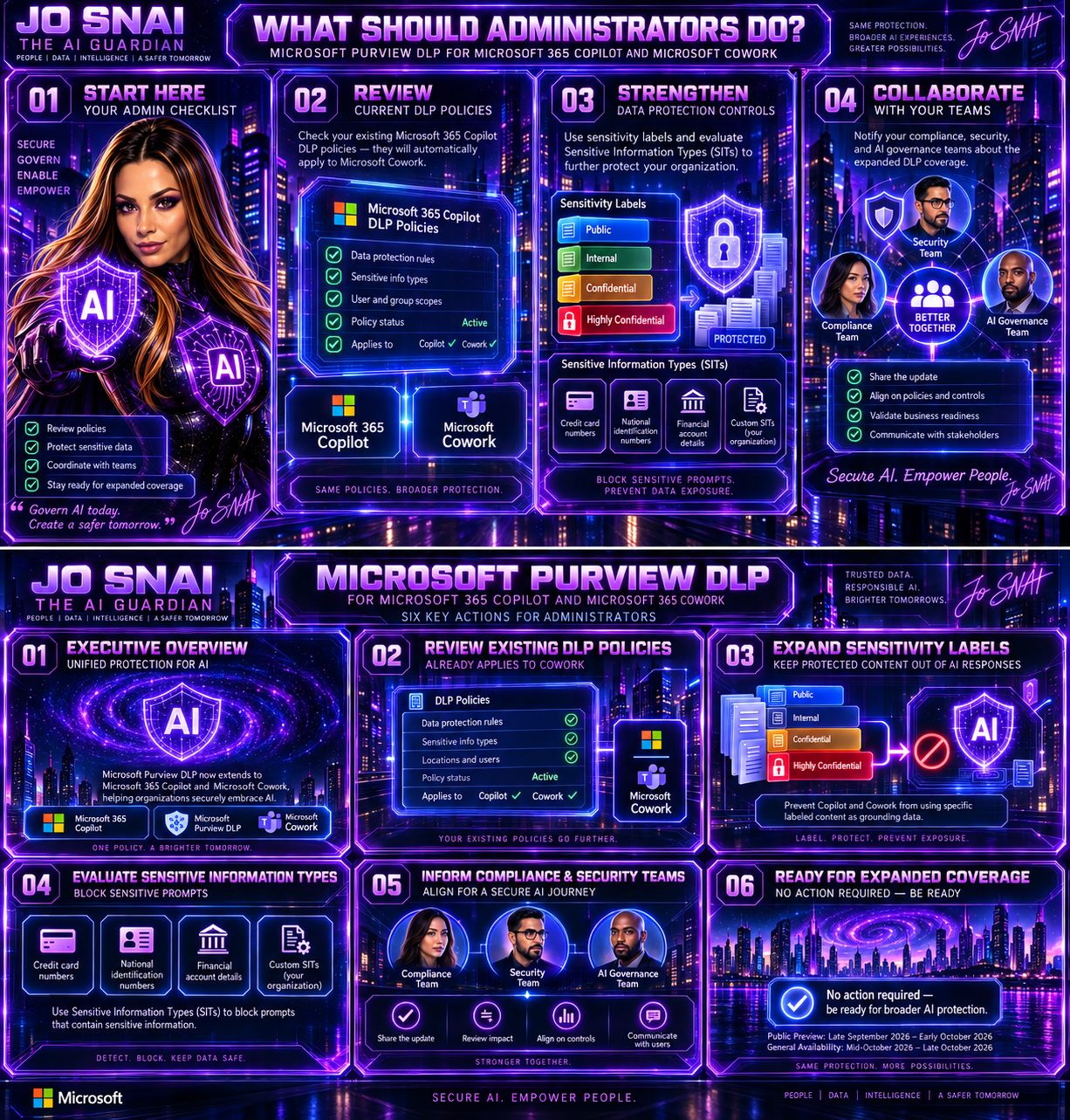
While no action is required to receive the update, Microsoft recommends that administrators:

  • Review current DLP policies targeting Microsoft 365 Copilot.
  • Assess whether additional sensitivity labels should be protected.
  • Evaluate existing and custom Sensitive Information Types.
  • Inform compliance, security, and AI governance teams about the expanded coverage.
Why This Matters

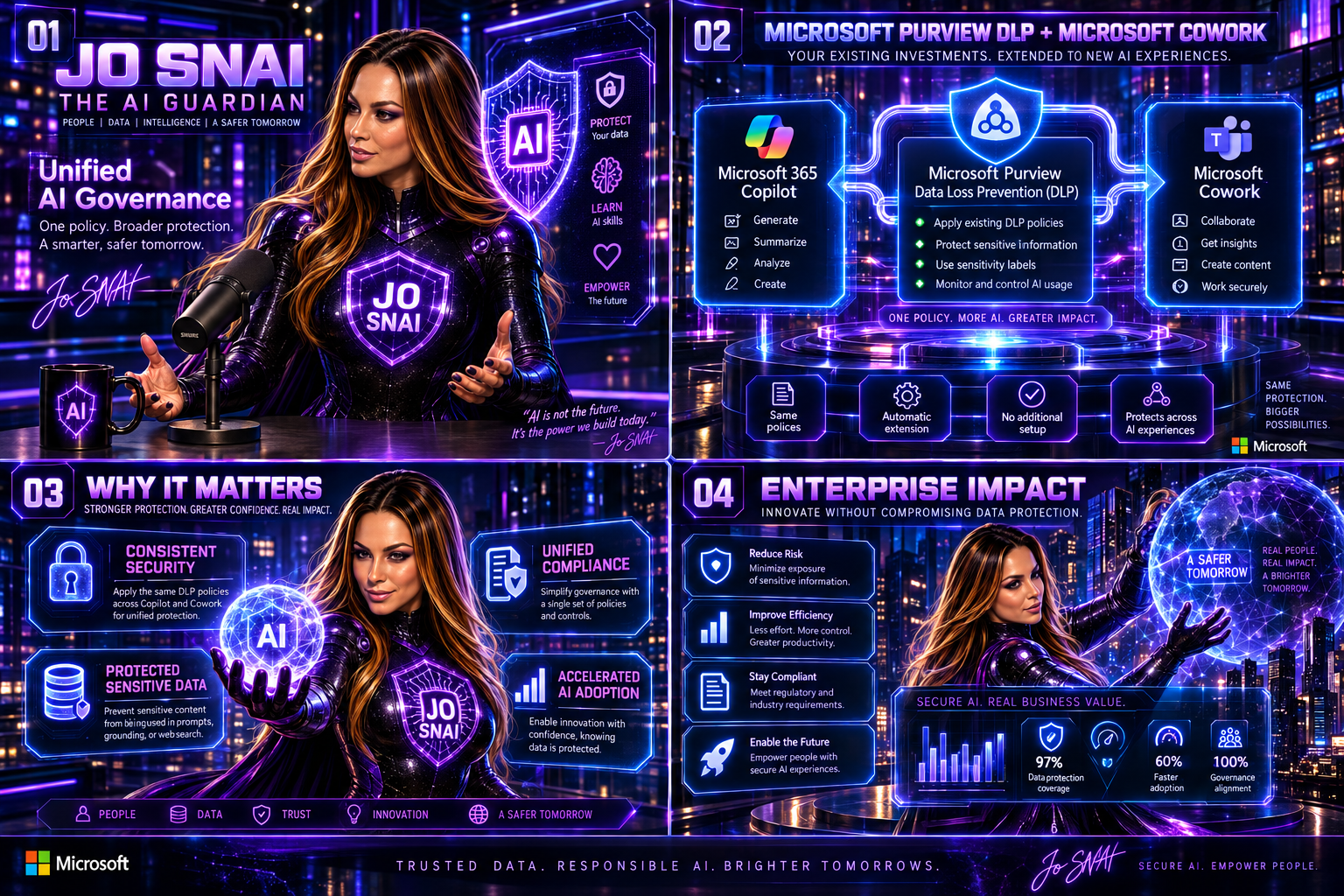
As AI becomes increasingly integrated into daily business operations, organizations need confidence that their existing compliance and security investments extend to new AI services. By bringing Microsoft Cowork under the protection of Microsoft Purview DLP, Microsoft is delivering a more unified approach to AI governance, helping organizations maintain control over sensitive data while accelerating AI adoption across the enterprise.

The result is a consistent security and compliance experience across Microsoft’s AI ecosystem, allowing businesses to innovate without compromising on data protection.


🎧 Tune in for all the details!
🎥 Watch now and discover how to secure AI without slowing innovation.
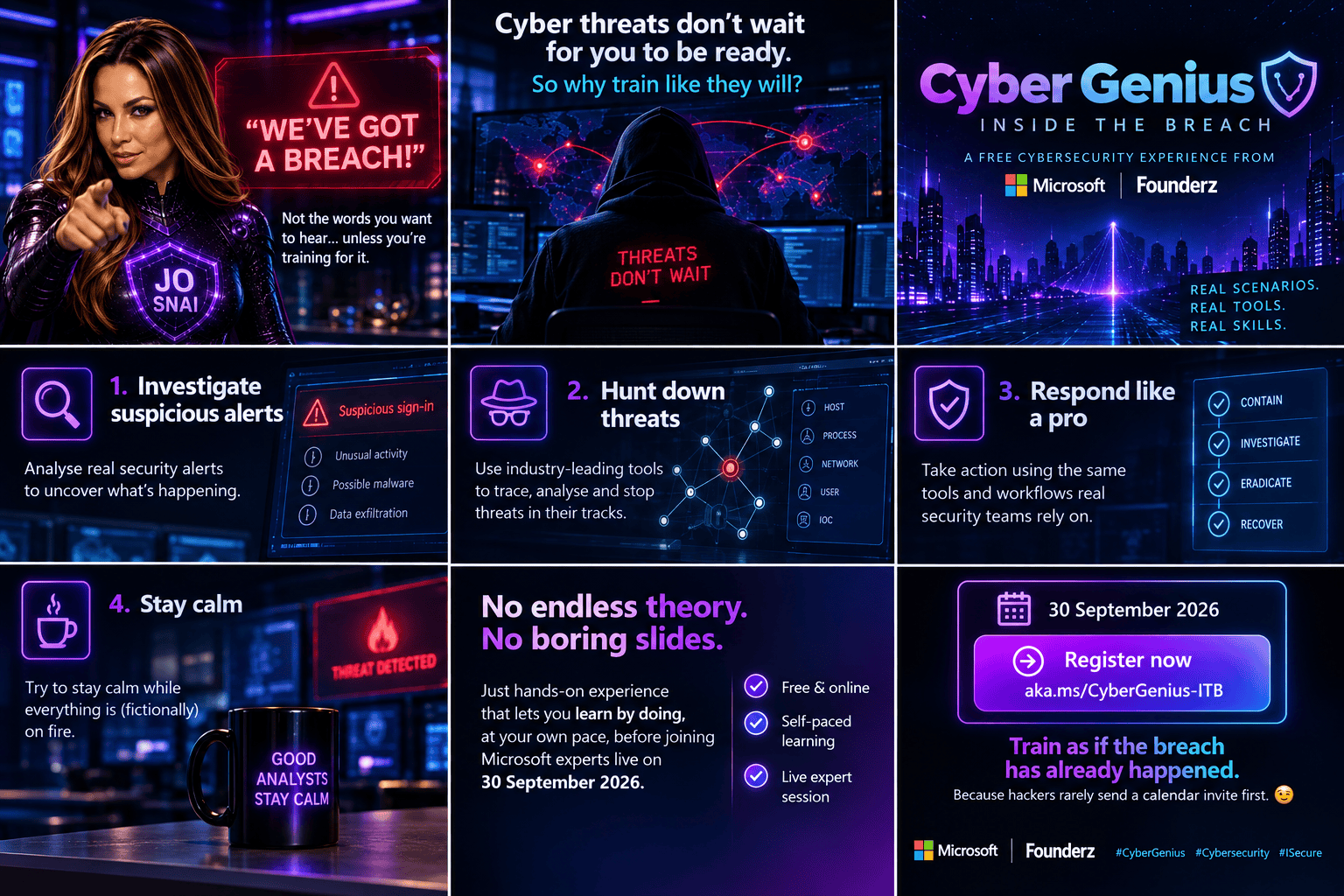
 

🚨 “We’ve Got a Breach!”

Probably not the words anyone wants to hear during a normal workday.

But when you’re learning cybersecurity, it’s exactly the kind of situation you should be prepared for.

The reality is that cyberattacks don’t wait until security teams have finished their training. Threats evolve constantly, and responding effectively requires more than theory. It requires practice.

That’s why I’m excited to share Cyber Genius | Inside the Breach, a free cybersecurity learning experience from Microsoft and Founderz that places you in the middle of a realistic security incident. From the first alert to full resolution, you’ll step through the same types of challenges security professionals face every day.

What you’ll do

🔍 Investigate suspicious alerts and indicators of compromise

🕵️ Hunt down threats across the environment

🛡️ Respond using real-world security workflows and methodologies

☕ Keep your cool while everything is (fictionally) on fire

Why it’s different

This isn’t another course filled with endless slides and passive learning. Instead, you’ll gain hands-on experience by working through a simulated breach scenario at your own pace, developing practical skills as you go.

Once you’ve completed the experience, you’ll have the opportunity to join Microsoft security experts live on 30 September 2026 for additional insights and discussion.

Event Details

✅ Free and online

✅ Self-paced learning experience

✅ Live expert session


📅 30 September 2026

🔗 Register: aka.ms/CyberGenius-ITB


Cybersecurity skills are built through practice. The best time to prepare for a breach is before one happens.

Because attackers rarely send a calendar invite first.


Removing pay-as-you-go requirements for Edge for Business DLP unmanaged app protections

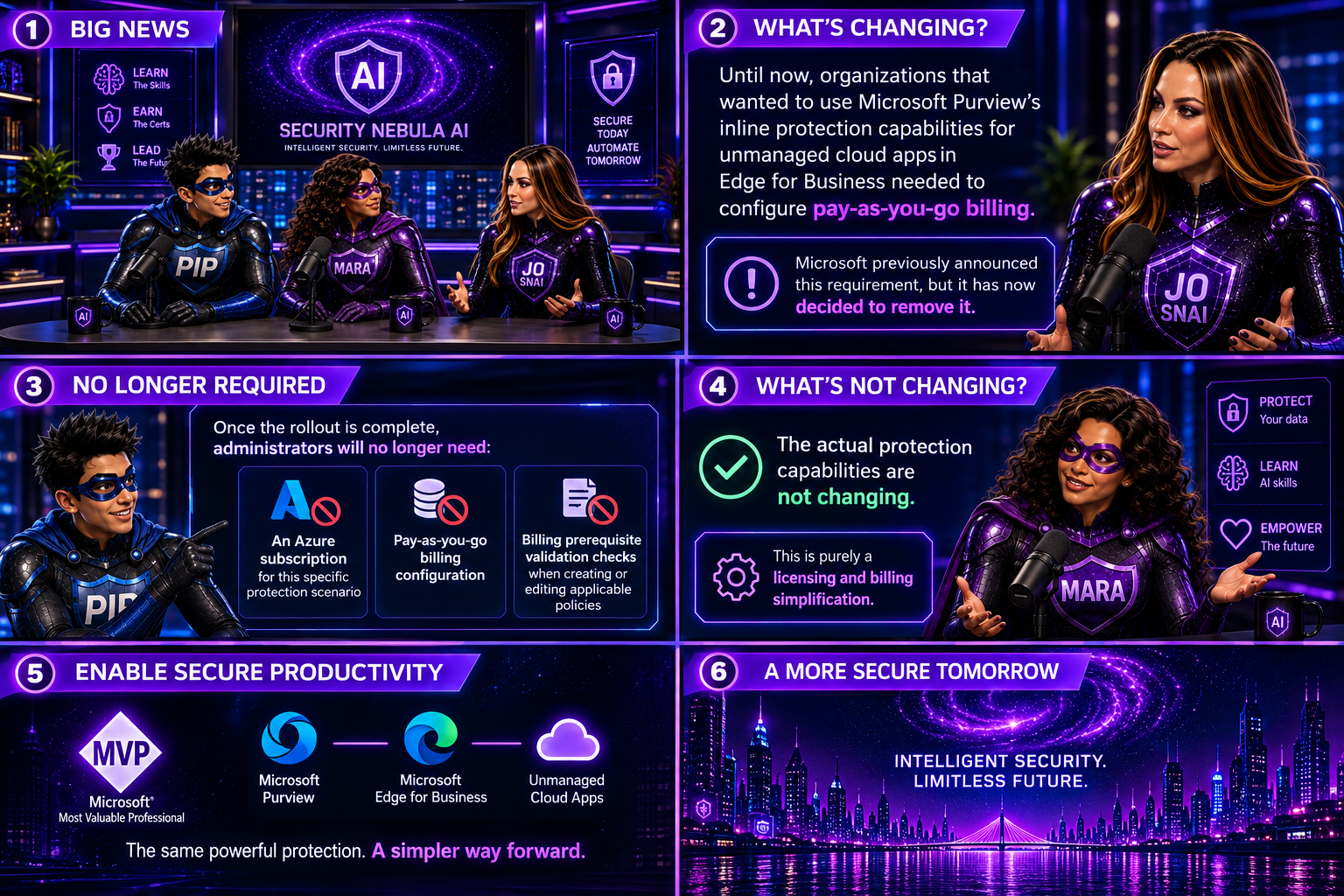
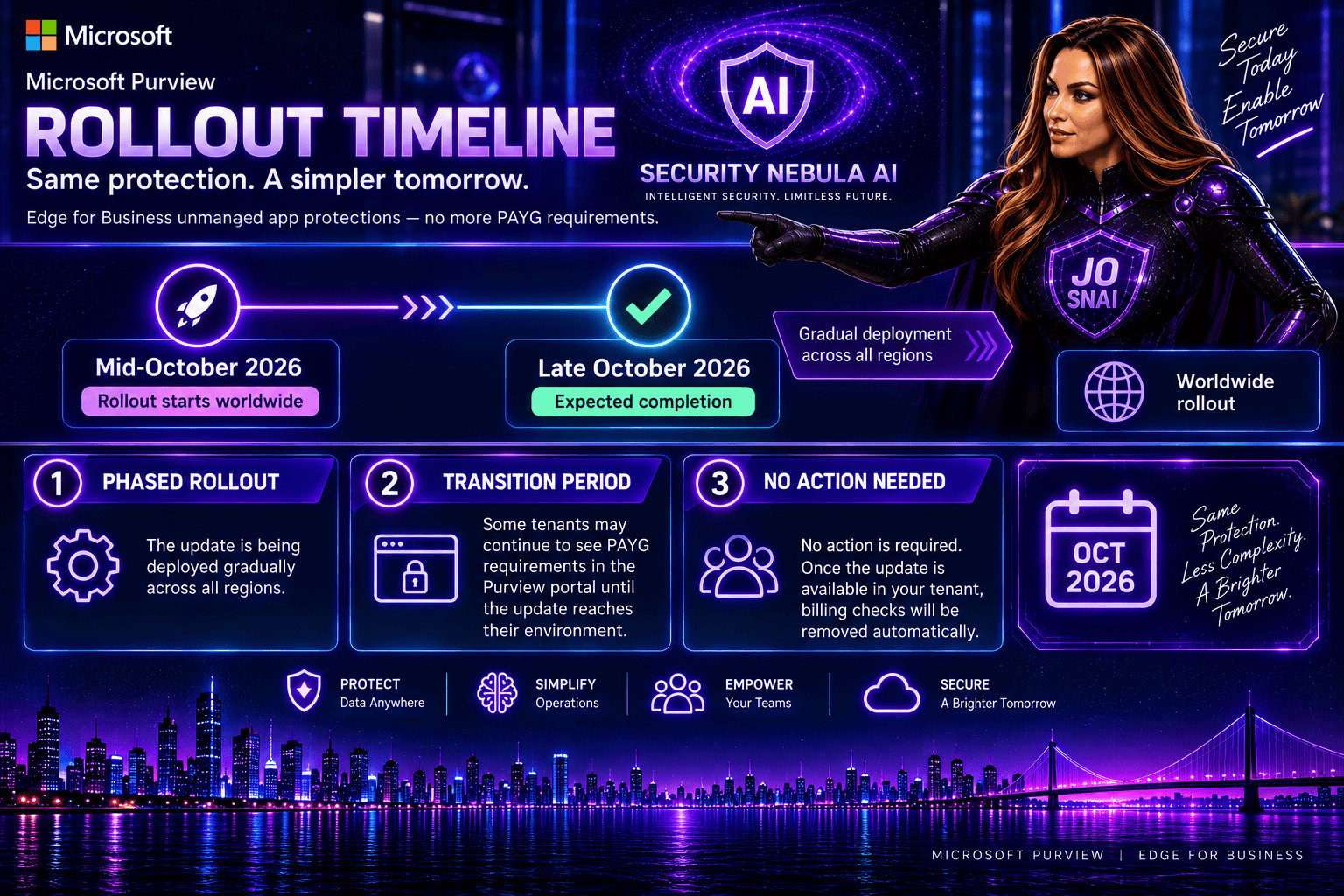
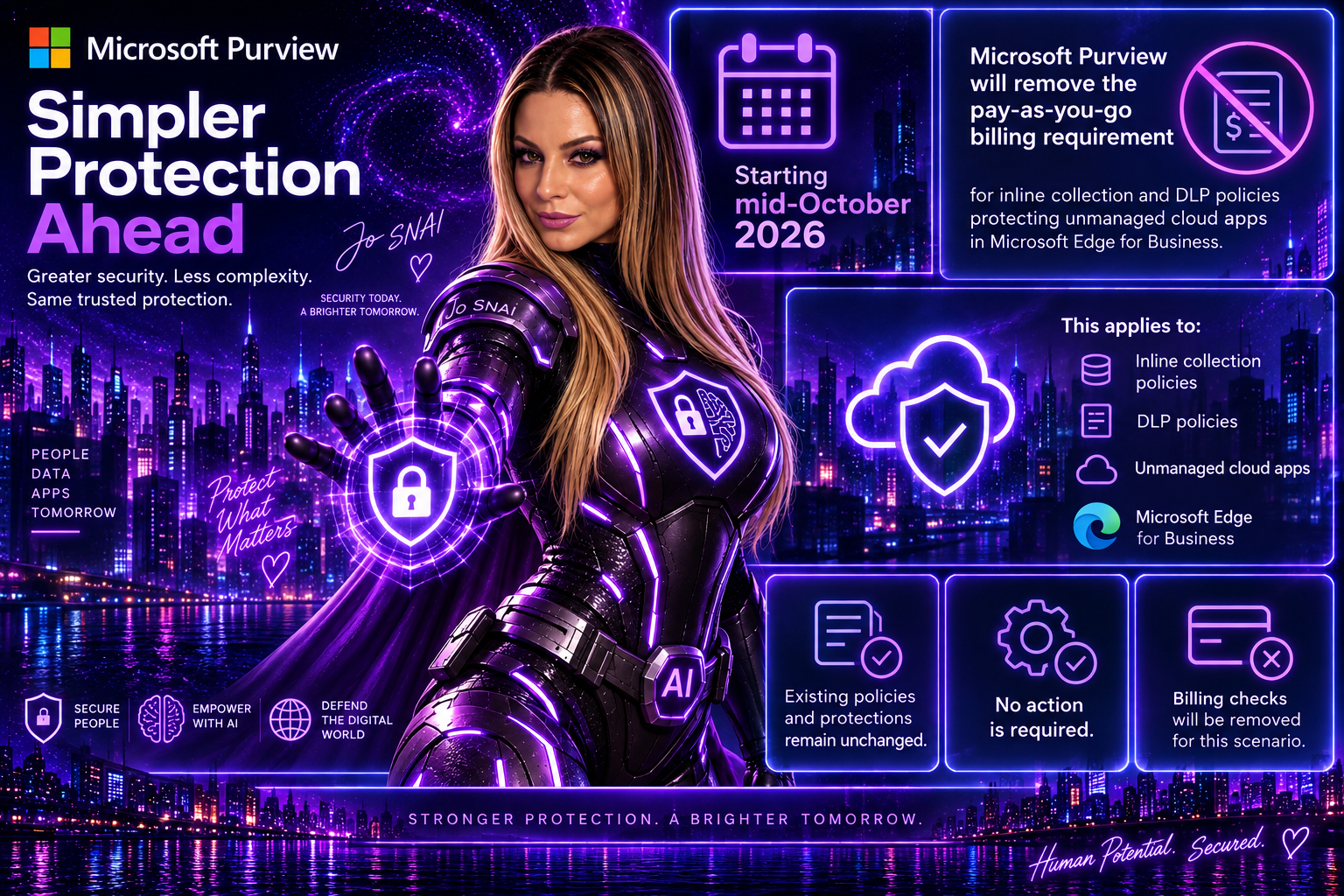
Good news for Microsoft Purview administrators. Microsoft is removing the pay-as-you-go (PAYG) billing requirement for Data Loss Prevention (DLP) and collection policies that protect unmanaged cloud app interactions in Microsoft Edge for Business. This change, rolling out starting in mid-October 2026, simplifies deployment and management by eliminating the need to connect an Azure subscription specifically for this Edge for Business protection scenario.


What’s Changing?

Until now, organizations that wanted to use Microsoft Purview’s inline protection capabilities for unmanaged cloud apps in Edge for Business needed to configure pay-as-you-go billing. Microsoft previously announced this requirement, but it has now decided to remove it.

Once the rollout is complete, administrators will no longer need:

  • An Azure subscription for this specific protection scenario
  • Pay-as-you-go billing configuration
  • Billing prerequisite validation checks when creating or editing applicable policies

The actual protection capabilities are not changing. This is purely a licensing and billing simplification.


What Stays the Same?

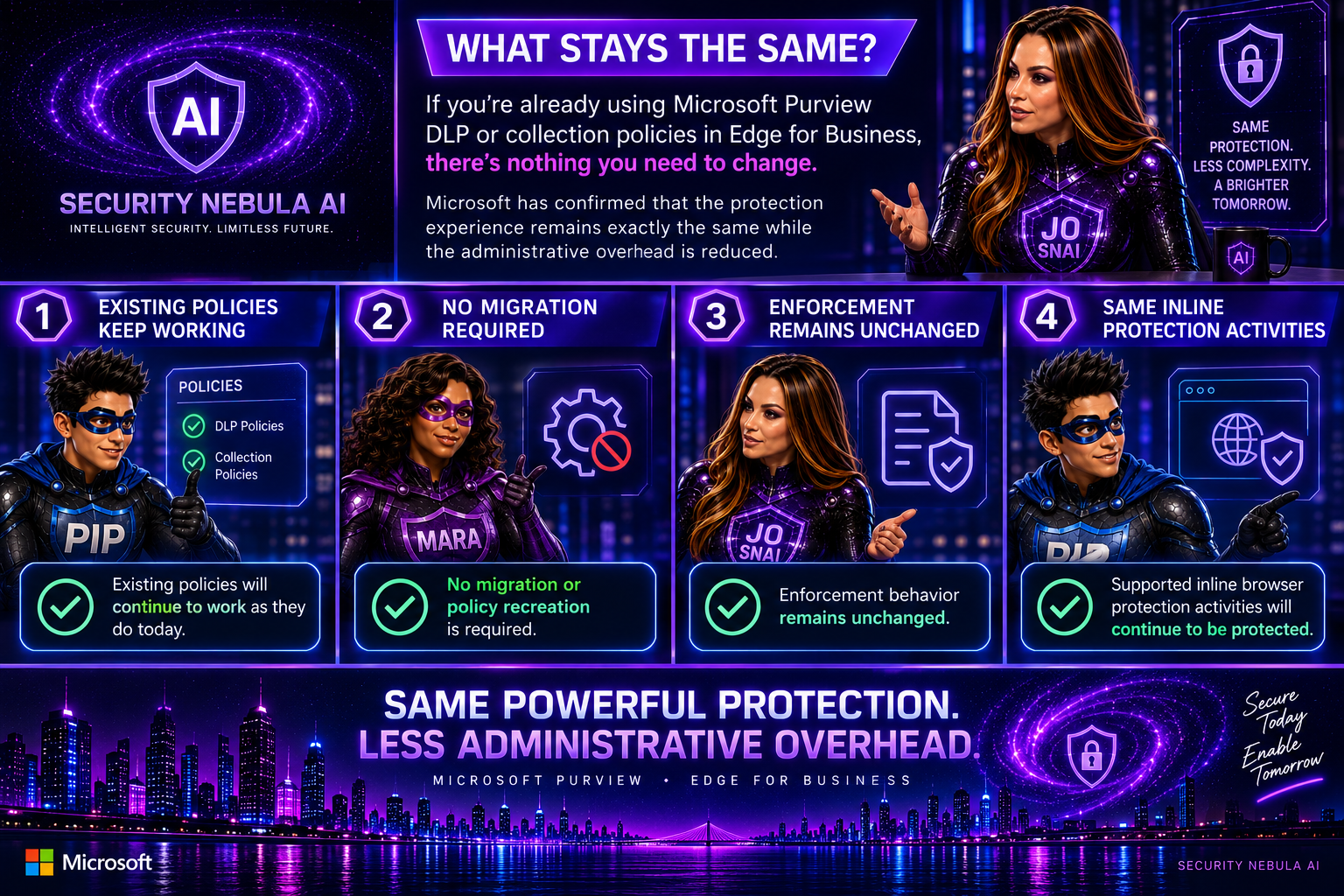
If you’re already using Purview DLP or collection policies in Edge for Business, there’s nothing you need to change.

Microsoft has confirmed that:

  • Existing policies will continue to work as they do today
  • No migration or policy recreation is required
  • Enforcement behavior remains unchanged
  • Supported inline browser protection activities will continue to be protected

In other words, the protection experience remains exactly the same while the administrative overhead is reduced.


Billing Impact

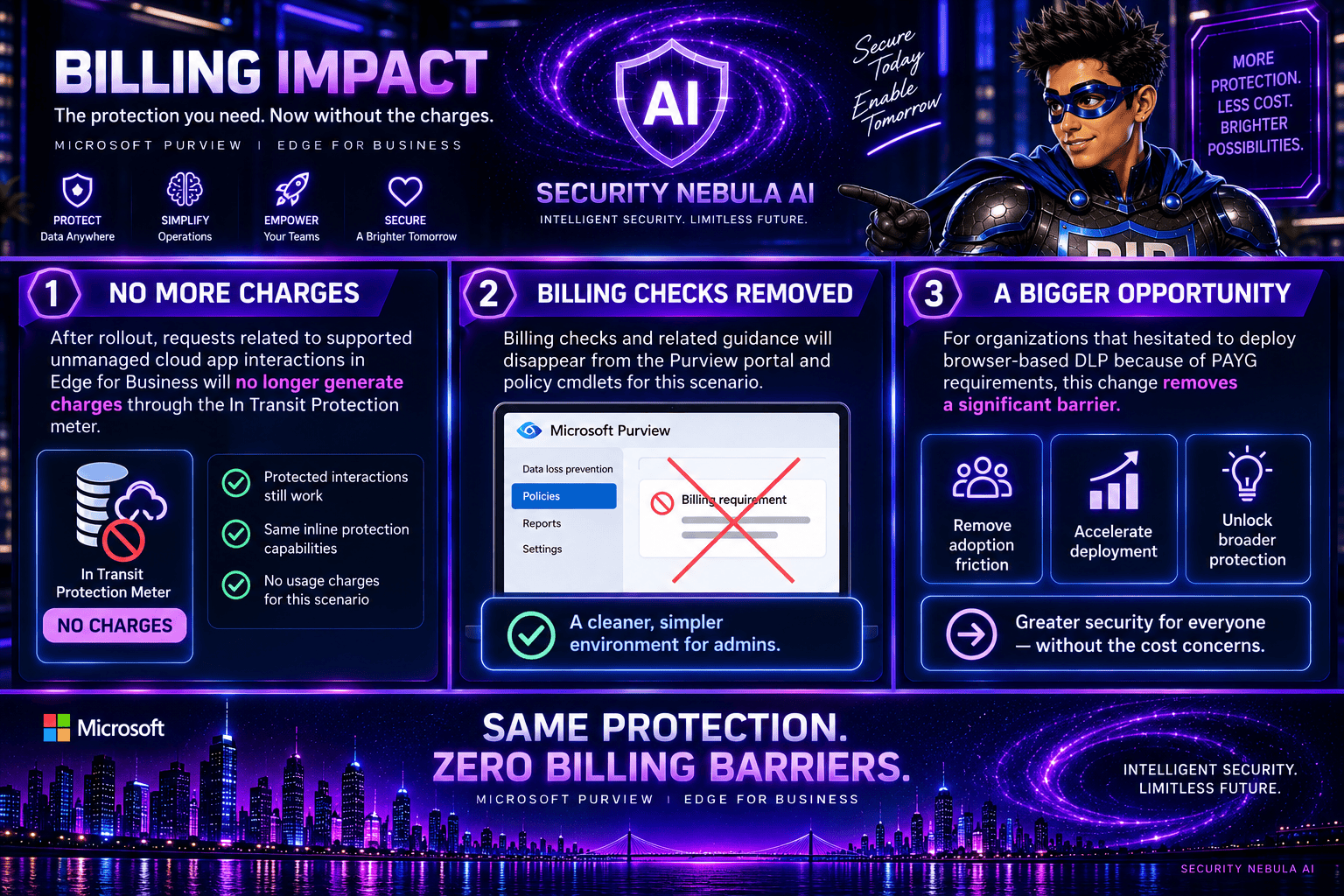
One of the biggest benefits of this update is the removal of charges associated with these protected interactions.

After rollout:

  • Requests related to supported unmanaged cloud app interactions in Edge for Business will no longer generate charges through the In Transit Protection meter.
  • Billing checks and related guidance will disappear from the Purview portal and policy cmdlets for this scenario.

For organizations that hesitated to deploy browser-based DLP because of PAYG requirements, this change removes a significant barrier.


Important: This Doesn’t Apply to Everything

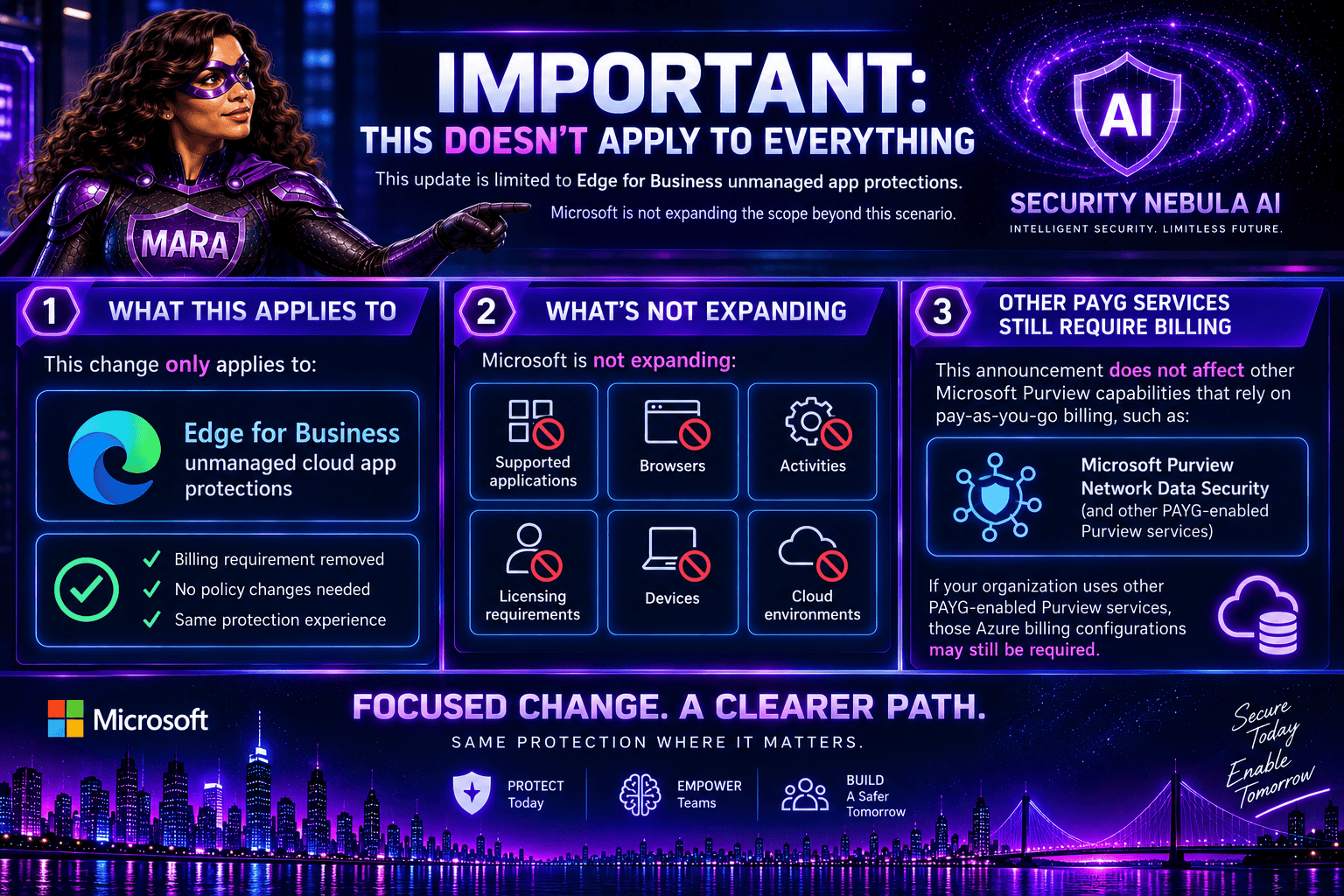
It’s worth noting that this update is limited to Edge for Business unmanaged app protections.

Microsoft is not expanding:

  • Supported applications
  • Browsers
  • Activities
  • Licensing requirements
  • Devices
  • Cloud environments

Additionally, other Microsoft Purview capabilities that rely on pay-as-you-go billing, such as Microsoft Purview Network Data Security, are not affected by this announcement. If your organization uses other PAYG-enabled Purview services, those Azure billing configurations may still be required.


Rollout Timeline

The update is scheduled to roll out worldwide:

  • Start: Mid-October 2026
  • Expected completion: Late October 2026

Because the deployment is gradual, some tenants may continue to see PAYG requirements in the Purview portal until the update reaches their environment.


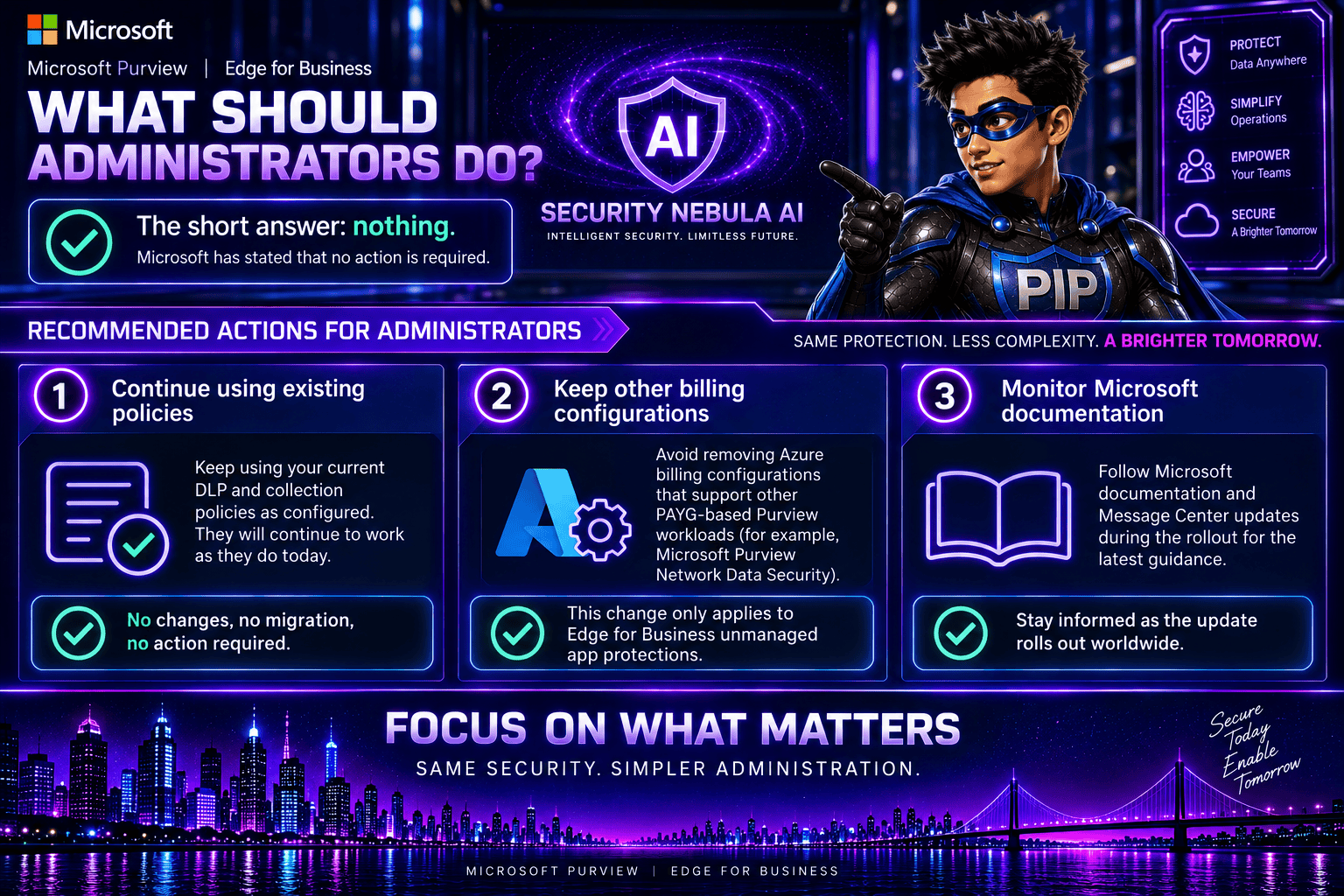
What Should Administrators Do?

The short answer: nothing.

Microsoft has stated that no action is required.

However, I recommend administrators:

  1. Continue using existing DLP and collection policies as configured.
  2. Avoid removing Azure billing configurations that support other PAYG-based Purview workloads.
  3. Monitor Microsoft documentation during the rollout for updated guidance.


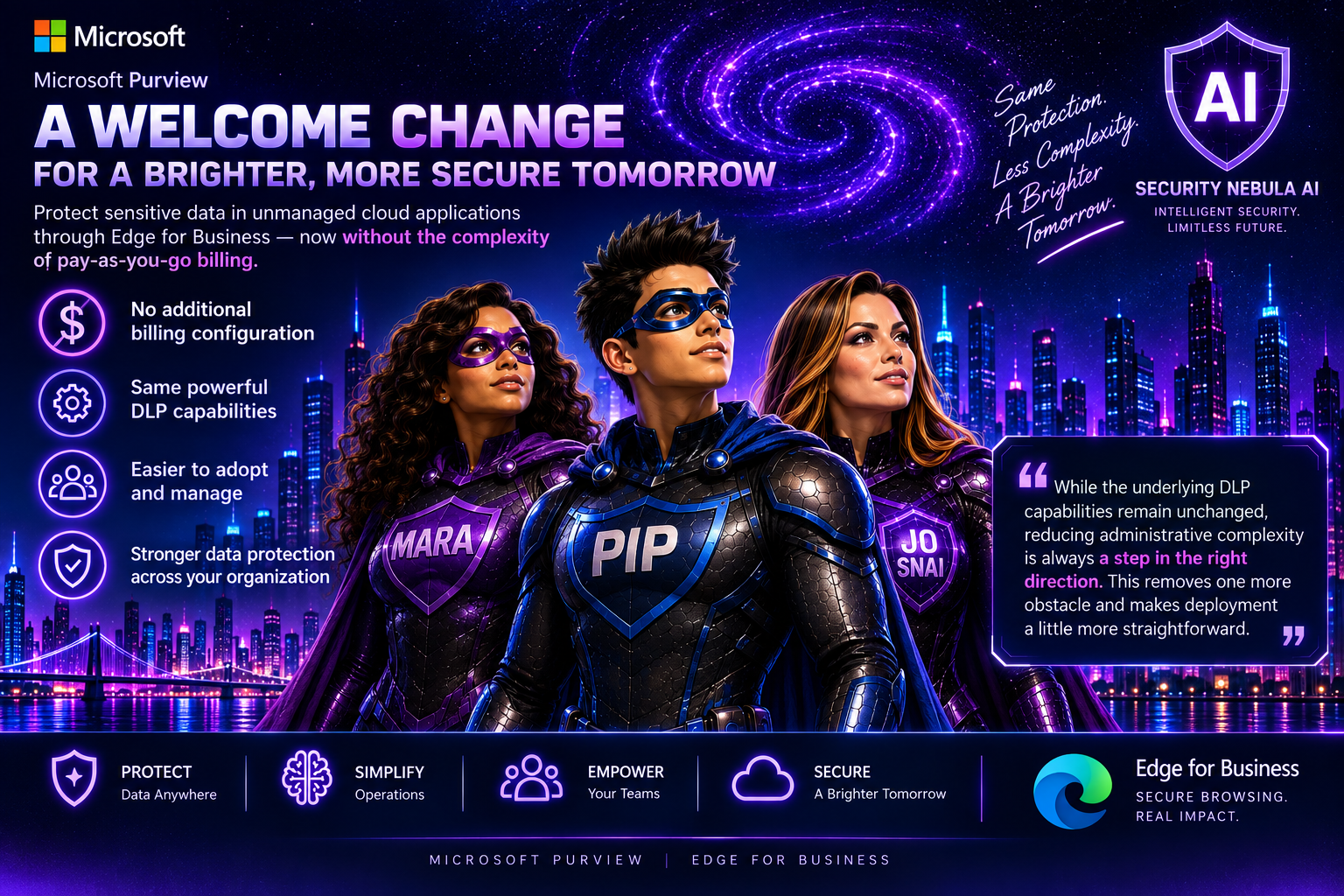
This is a welcome change that makes Microsoft Purview easier to adopt and manage. Security teams can continue protecting sensitive data flowing to unmanaged cloud applications through Edge for Business without having to worry about additional billing configuration or consumption-based charges for this use case.

While the underlying DLP capabilities remain unchanged, reducing administrative complexity is always a step in the right direction. For organizations looking to strengthen browser-based data protection, this removes one more obstacle and makes deployment a little more straightforward.


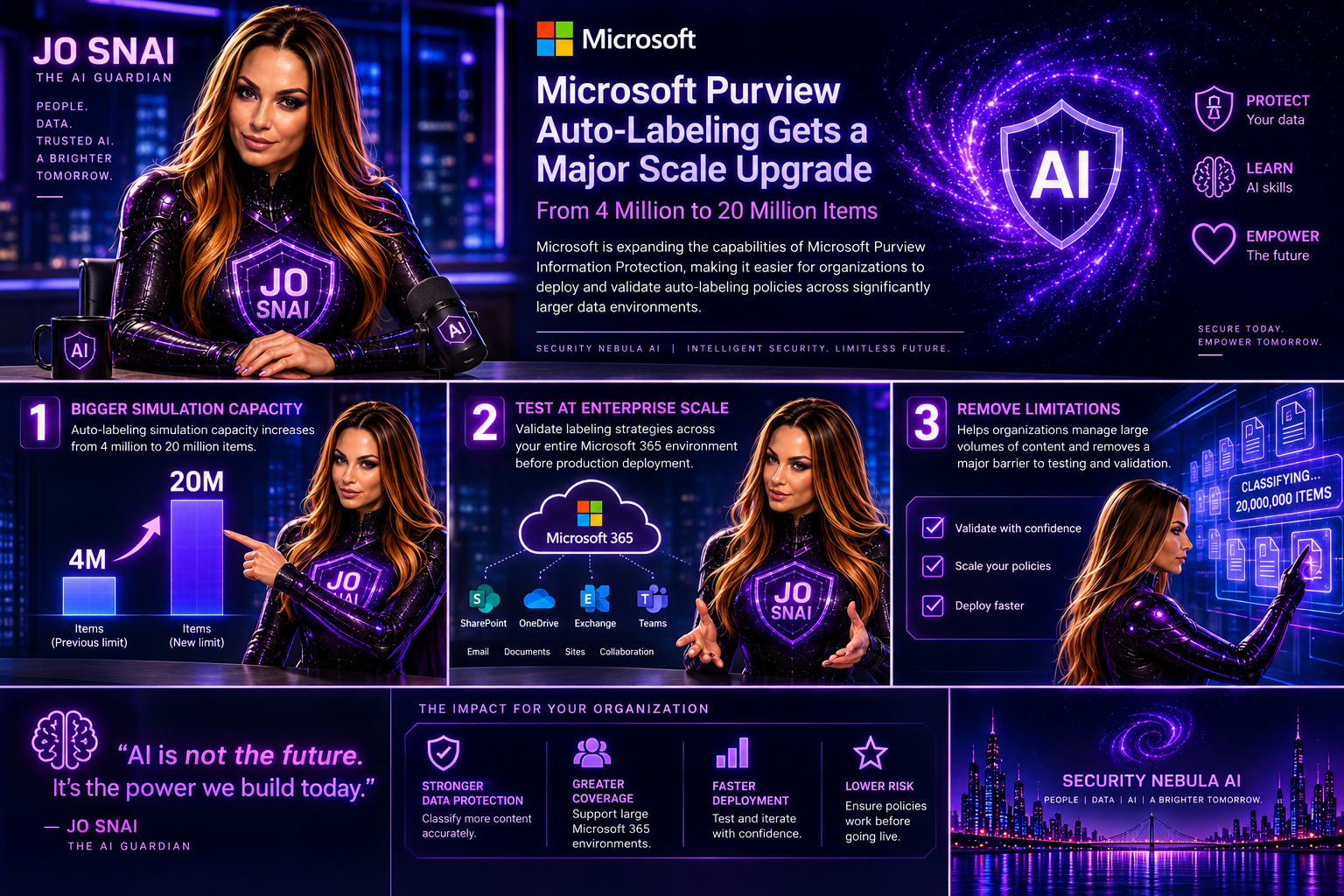
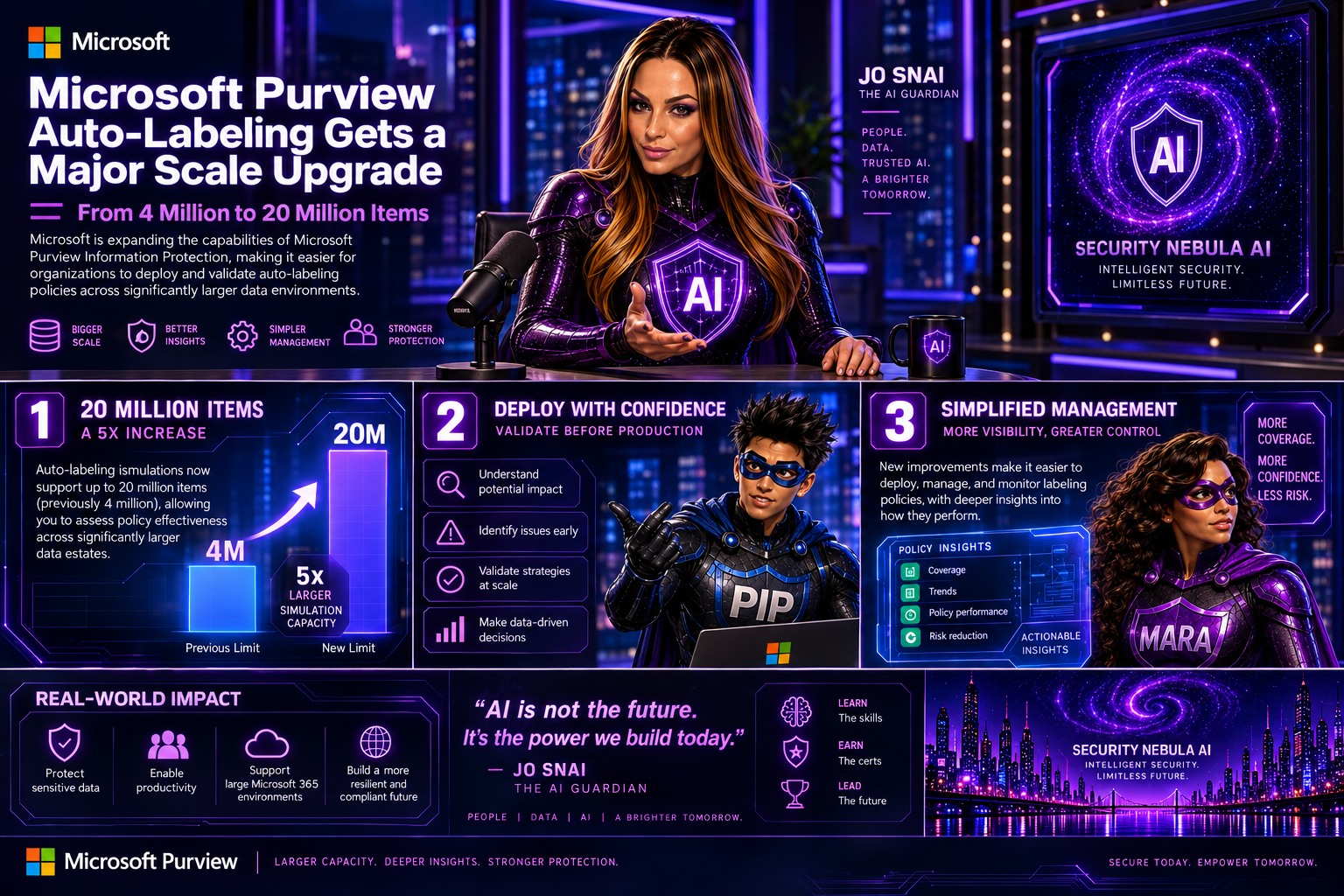
Microsoft Purview Autolabeling Gets a Major Scale Upgrade: From 4 Million to 20 Million Items

Microsoft is expanding the capabilities of Microsoft Purview Information Protection, making it easier for organizations to deploy and validate autolabeling policies across significantly larger data environments.  The headline enhancement is a substantial increase in autolabeling simulation capacity, growing from 4 million to 20 million items. For organizations managing large volumes of content across Microsoft 365, this change removes a major limitation when testing and validating labeling strategies before production deployment.

What’s Changing?

With this update, administrators will be able to simulate autolabeling policies against much larger datasets, helping them better understand potential policy impact and identify issues before enabling automatic labeling.

Microsoft is also introducing several improvements aimed at simplifying policy management and providing deeper visibility into how labeling policies perform.

Key Enhancements

Autolabeling simulations now support up to 20 million items

The previous simulation limit of 4 million items has been increased fivefold, allowing organizations to assess policy effectiveness across significantly larger data estates.

Expanded SharePoint targeting

Administrators will now be able to:

  • Select up to 1,000 individual SharePoint sites when configuring an autolabeling policy.
  • Use adaptive scopes that support up to 50,000 SharePoint sites per policy.
  • Filter SharePoint sites using the SiteTemplate property during policy creation, providing more granular control over policy targeting.

Improved reporting and visibility

Microsoft is enhancing the audit and reporting experience with new insights, including:

  • Summaries of the Sensitive Information Types (SITs) detected when labels are applied.
  • A new 30-day processing chart that shows the number of files processed each day, helping administrators track policy throughput and identify trends over time.

These reporting enhancements should make it much easier to understand why labels are being applied and monitor the effectiveness of information protection policies.

Rollout Timeline

Microsoft plans to release these capabilities according to the following schedule:

  • Public Preview: Early September 2026 through mid-September 2026
  • General Availability: Beginning in late October 2026

The features will be enabled automatically as they become available in each tenant.

What Does This Mean for Organizations?

For most organizations, no action is required. Existing autolabeling policies will continue to function exactly as they do today.

However, security and compliance teams may want to revisit policies that were previously constrained by simulation limits or SharePoint scope restrictions. The increased scale opens opportunities to include additional repositories and validate policies against much larger datasets before deployment. Organizations should also consider updating their operational and reporting processes to take advantage of the new SIT visibility and processing metrics.

Compliance Impact

The update does not change how labels work, how Sensitive Information Types are defined, or how customer data is handled.

Instead, Microsoft is increasing the scale at which policies can be evaluated while improving monitoring and reporting capabilities. The added visibility into detected Sensitive Information Types and policy processing activity should help compliance teams better demonstrate and validate their information protection efforts.

Final Thoughts

This is a welcome enhancement for enterprises managing large-scale Microsoft 365 environments. The jump from 4 million to 20 million simulated items, combined with expanded SharePoint coverage and richer reporting, makes Microsoft Purview’s autolabeling capabilities more practical for organizations with complex compliance requirements and large volumes of content. For many Purview administrators, the real value will come from being able to test policies more thoroughly, target more content locations, and gain better insight into exactly how their information protection strategy is performing.

Main Improvements Made

  • Converted formal release-note language into a conversational blog style.
  • Added clear section headings and narrative flow.
  • Focused on business value and real-world impact rather than feature descriptions alone.
  • Reduced repetitive compliance wording while preserving all key technical details.
  • Added a concise conclusion with practical takeaways for administrators and compliance teams.

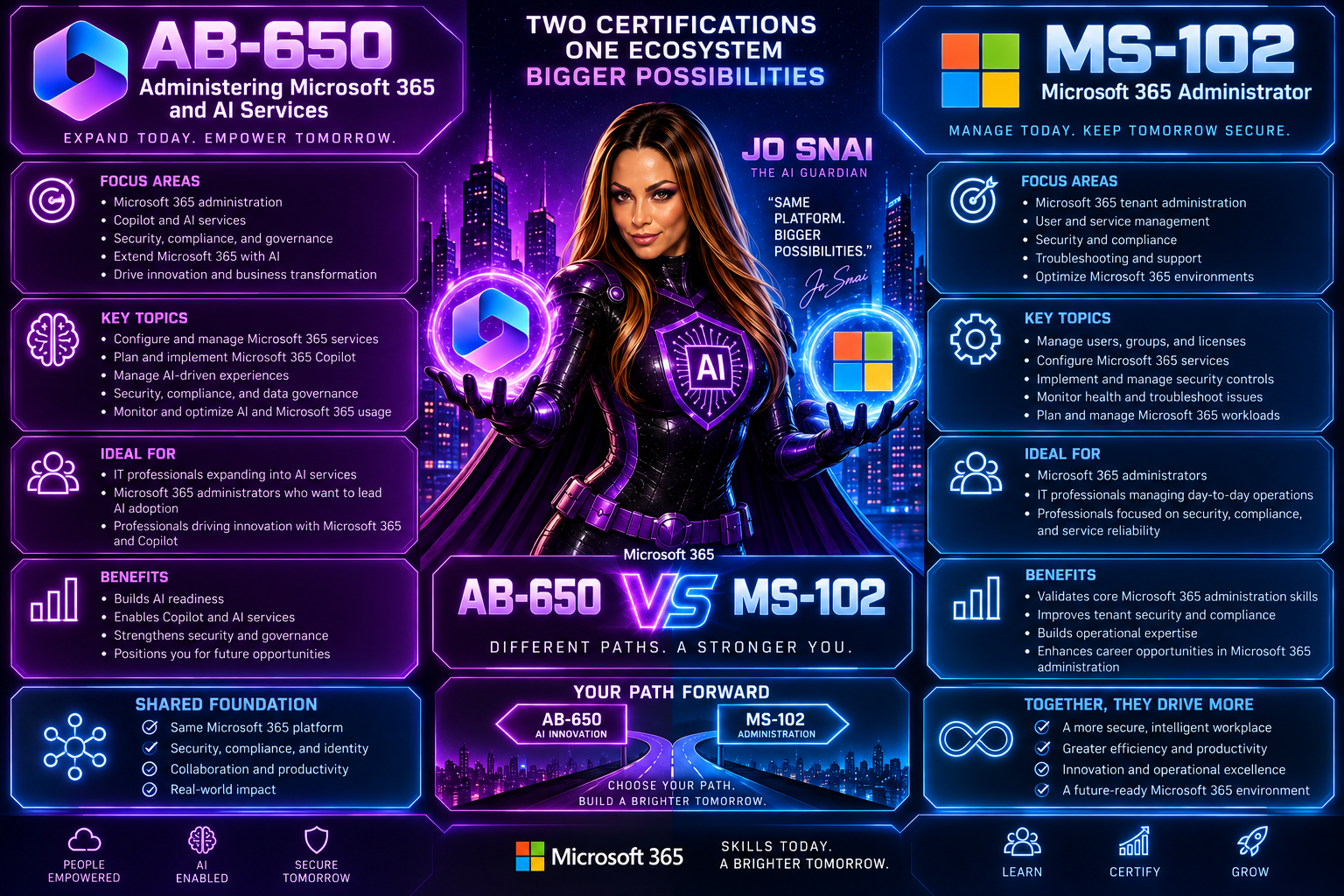
MS-102 vs. AB-650: More Than a New Certification. A New Era for Microsoft 365 Administrators

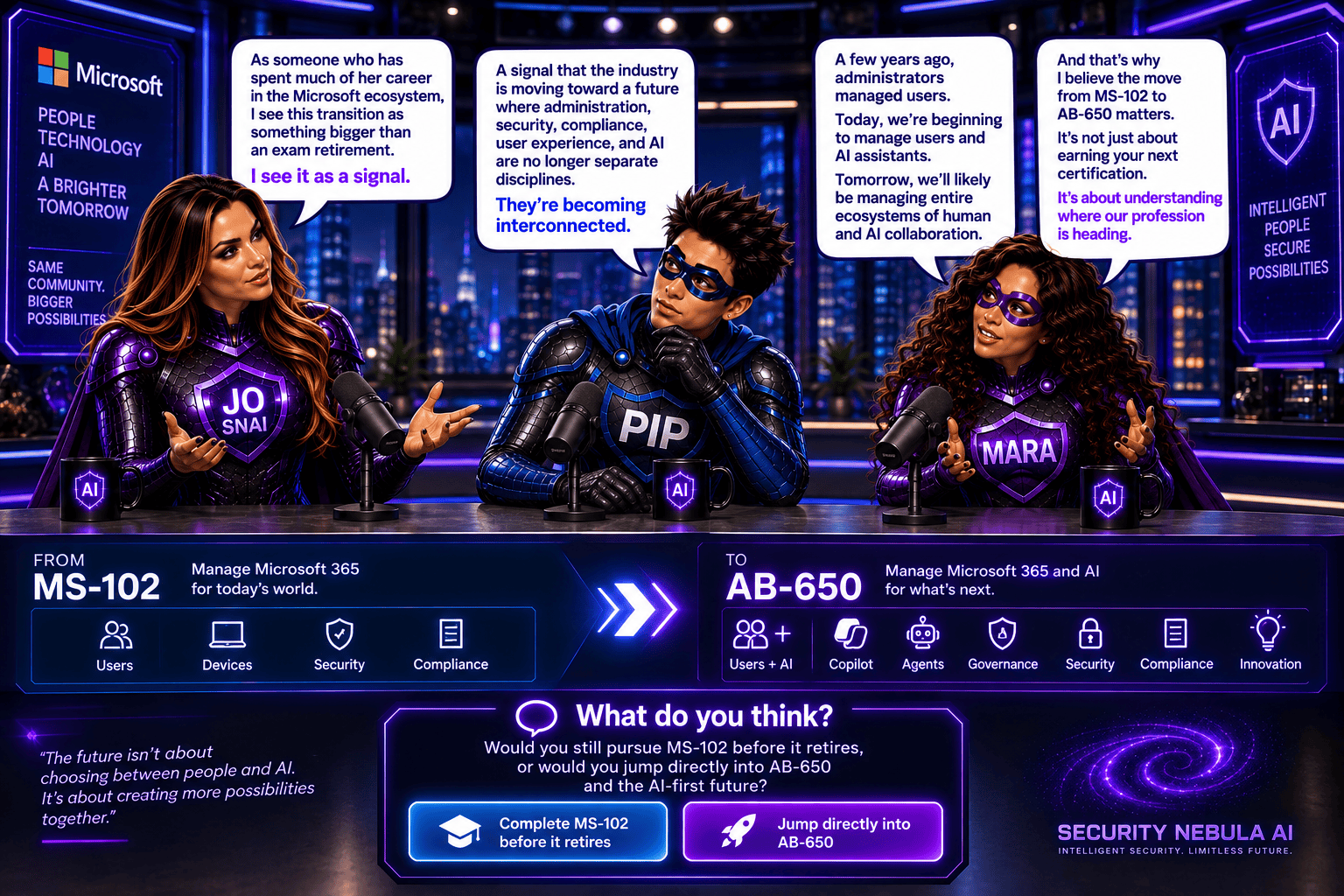
When I first saw that Microsoft plans to retire MS-102: Microsoft 365 Administrator and introduce AB-650: Administering Microsoft 365 and AI Services, my immediate reaction wasn’t, “Oh, another certification update.”

Instead, I found myself thinking:  “This is a reflection of how our roles are changing.”

For years, Microsoft 365 administrators have focused on identities, security, compliance, endpoints, licensing, and tenant management. Those responsibilities aren’t going away. But something new is being added to the mix: AI administration.

And that’s exactly what makes the transition from MS-102 to AB-650 so interesting.


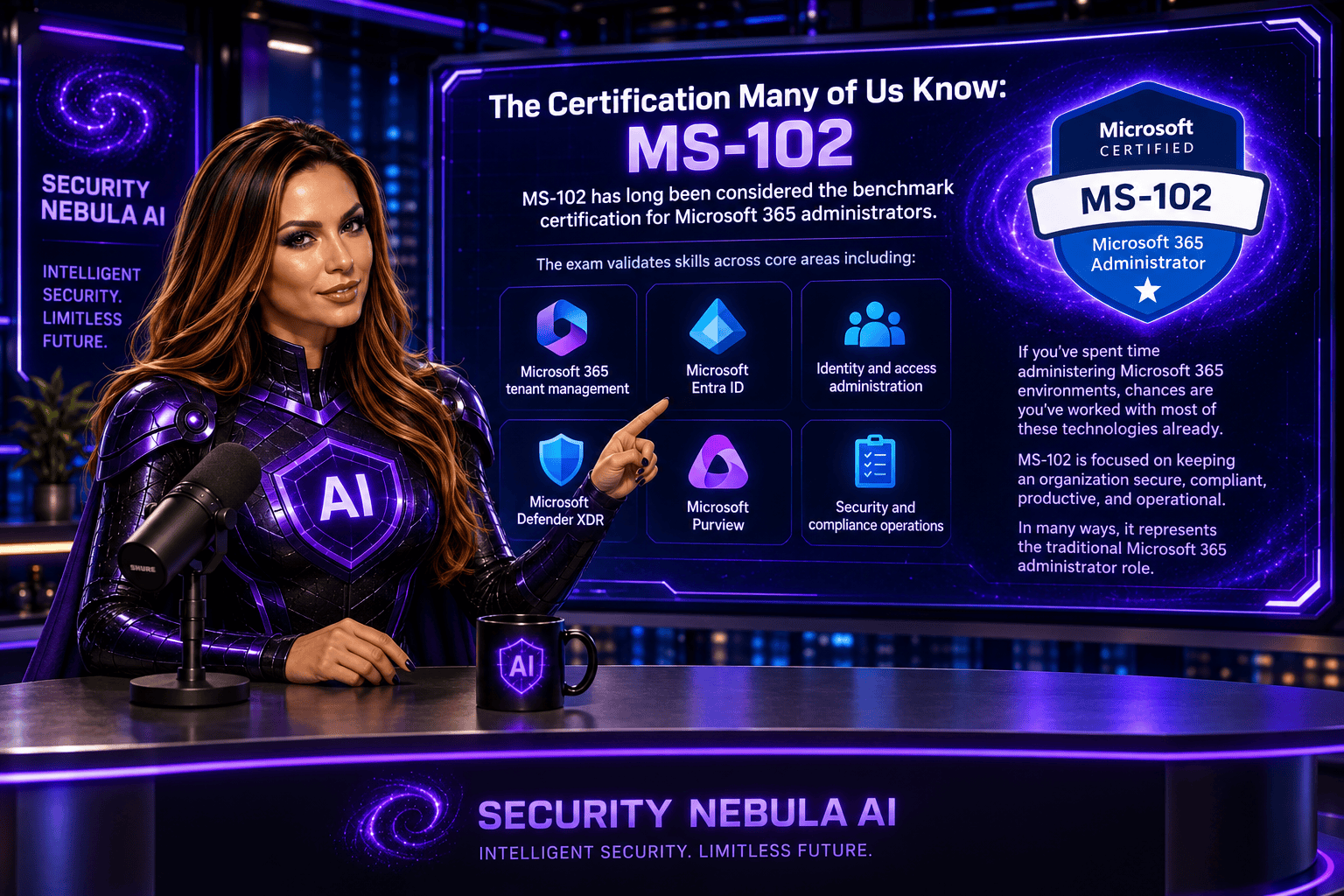
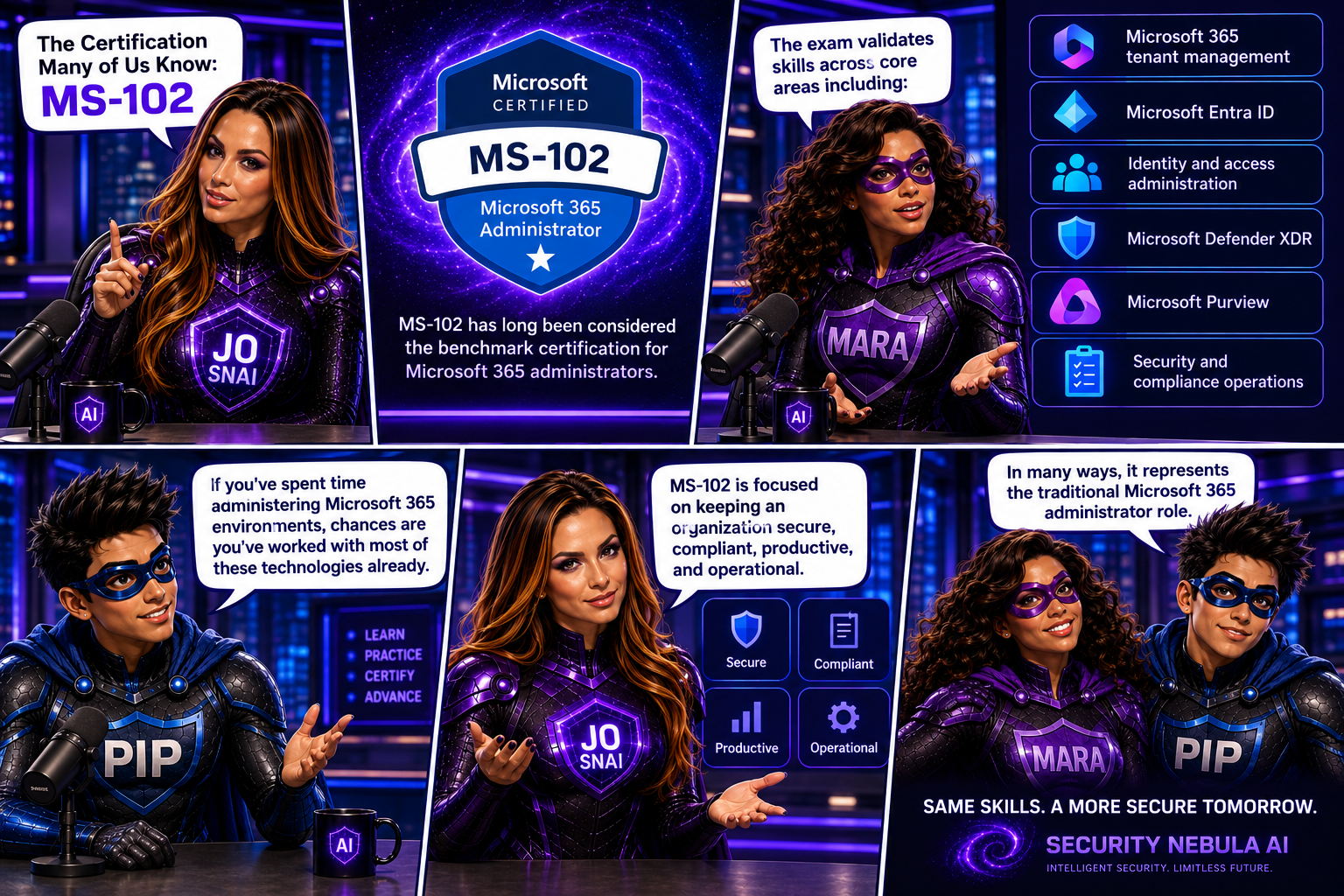
The Certification Many of Us Know: MS-102

MS-102 has long been considered the benchmark certification for Microsoft 365 administrators.

The exam validates skills across core areas including:

  • Microsoft 365 tenant management
  • Microsoft Entra ID
  • Identity and access administration
  • Microsoft Defender XDR
  • Microsoft Purview
  • Security and compliance operations

If you’ve spent time administering Microsoft 365 environments, chances are you’ve worked with most of these technologies already.

MS-102 is focused on keeping an organization secure, compliant, productive, and operational.

In many ways, it represents the traditional Microsoft 365 administrator role.

Why Microsoft Is Moving On

Technology never stands still.

Over the last two years, we’ve witnessed something that has fundamentally changed the workplace: the rapid adoption of AI.

Organizations are no longer asking whether they will use AI.

They’re asking:

  • How do we deploy it?
  • How do we govern it?
  • How do we secure it?
  • How do we control access to organizational data?
  • How do we manage AI agents?

These questions weren’t part of a traditional Microsoft 365 administrator’s responsibilities a few years ago.

Today, they are becoming part of everyday conversations.

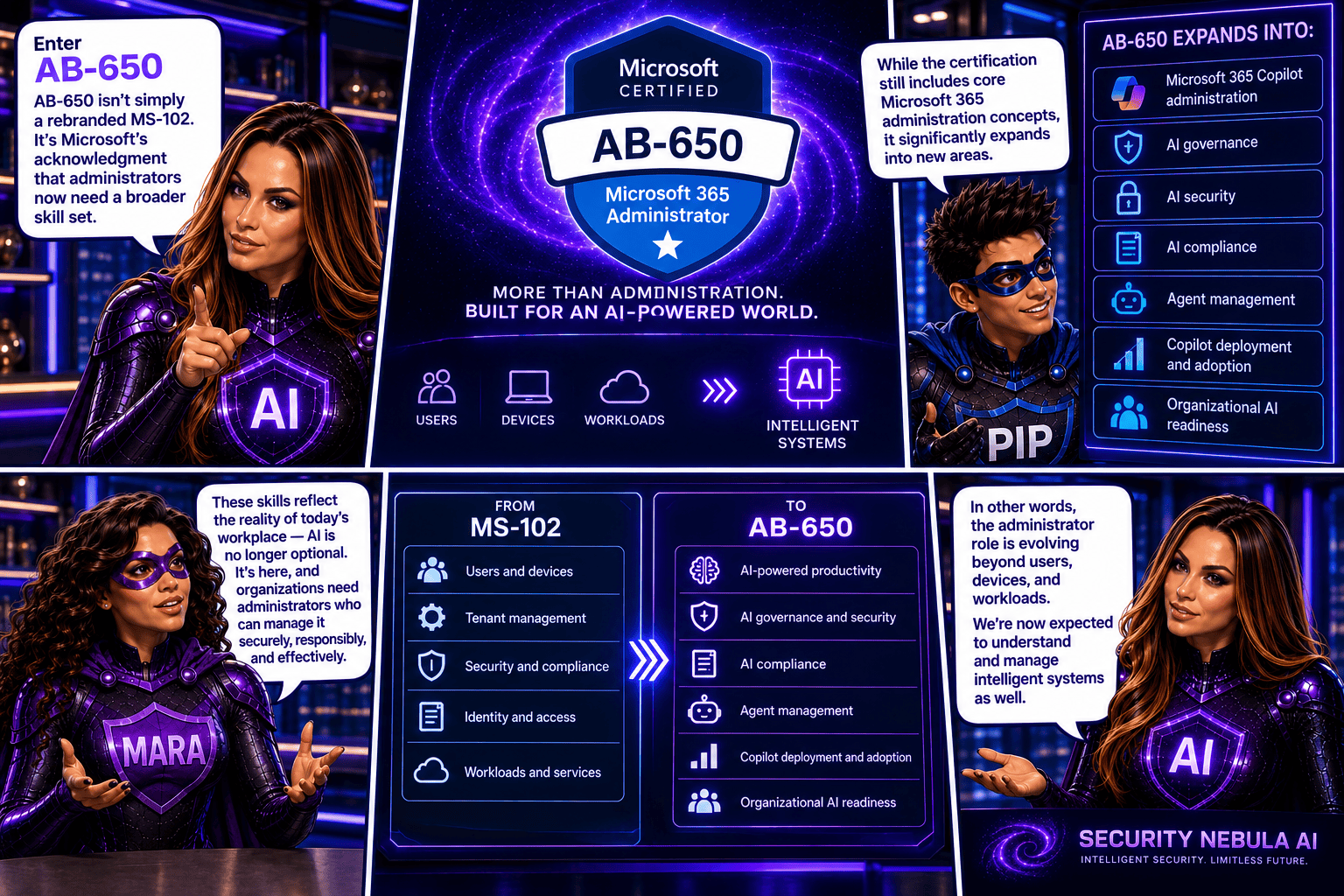
Enter AB-650

AB-650 isn’t simply a rebranded MS-102.

It’s Microsoft’s acknowledgment that administrators now need a broader skill set.

While the certification still includes core Microsoft 365 administration concepts, it significantly expands into areas such as:

  • Microsoft 365 Copilot administration
  • AI governance
  • AI security
  • AI compliance
  • Agent management
  • Copilot deployment and adoption
  • Organizational AI readiness

In other words, the administrator role is evolving beyond users, devices, and workloads.

We’re now expected to understand and manage intelligent systems as well.


The Biggest Difference

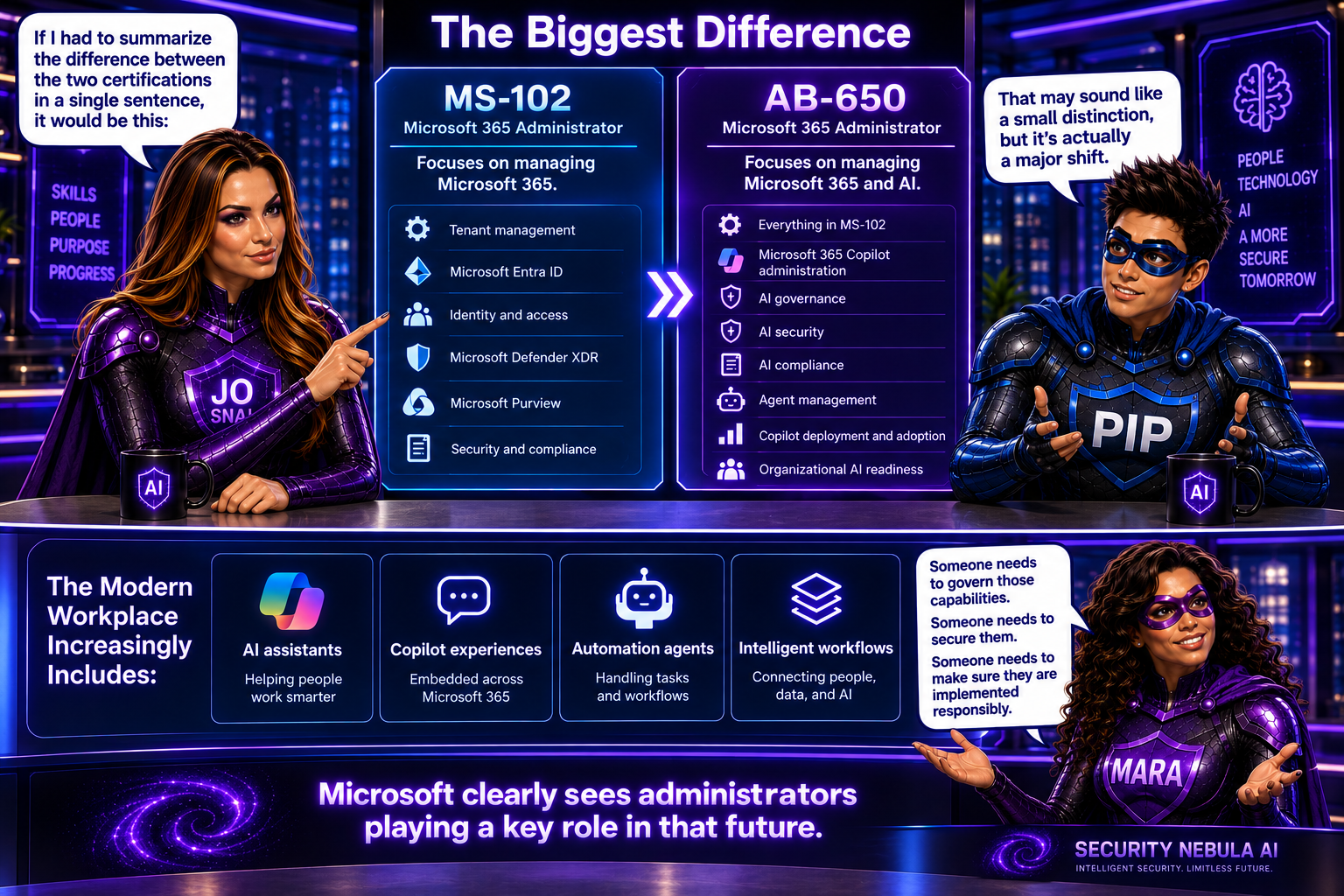
If I had to summarize the difference between the two certifications in a single sentence, it would be this:

MS-102 focuses on managing Microsoft 365. AB-650 focuses on managing Microsoft 365 and AI.

That may sound like a small distinction, but it’s actually a major shift.

The modern workplace increasingly includes:

  • AI assistants
  • Copilot experiences
  • Automation agents
  • Intelligent workflows

Someone needs to govern those capabilities.

Someone needs to secure them.

Someone needs to make sure they are implemented responsibly.

Microsoft clearly sees administrators playing a key role in that future.

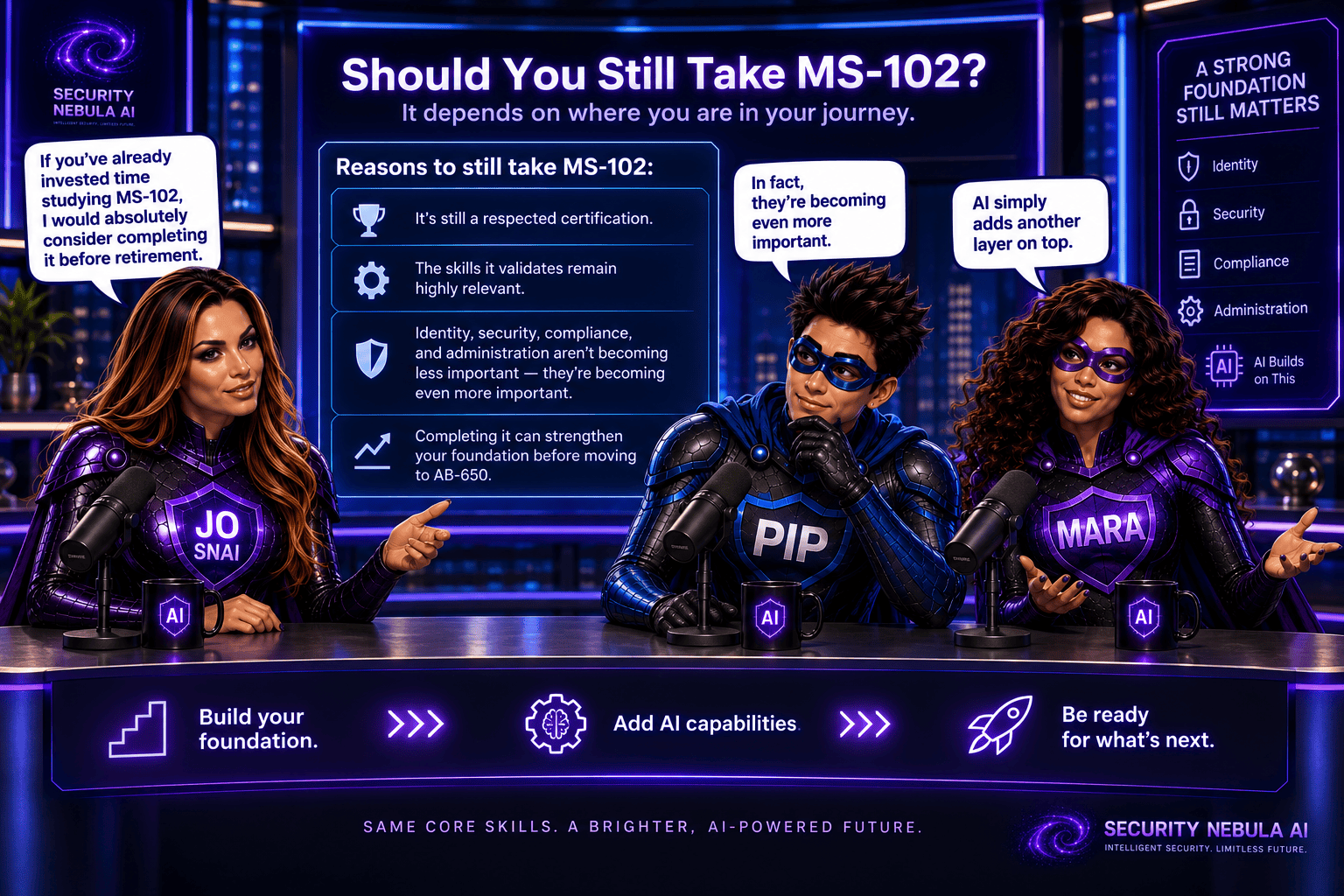
Should You Still Take MS-102?

Honestly, I think the answer depends on where you are in your journey.

If you’ve already invested time studying MS-102, I would absolutely consider completing it before retirement.

It’s still a respected certification, and the skills it validates remain highly relevant.

Identity, security, compliance, and administration aren’t becoming less important because AI arrived.

In fact, they’re becoming even more important.

AI simply adds another layer on top.

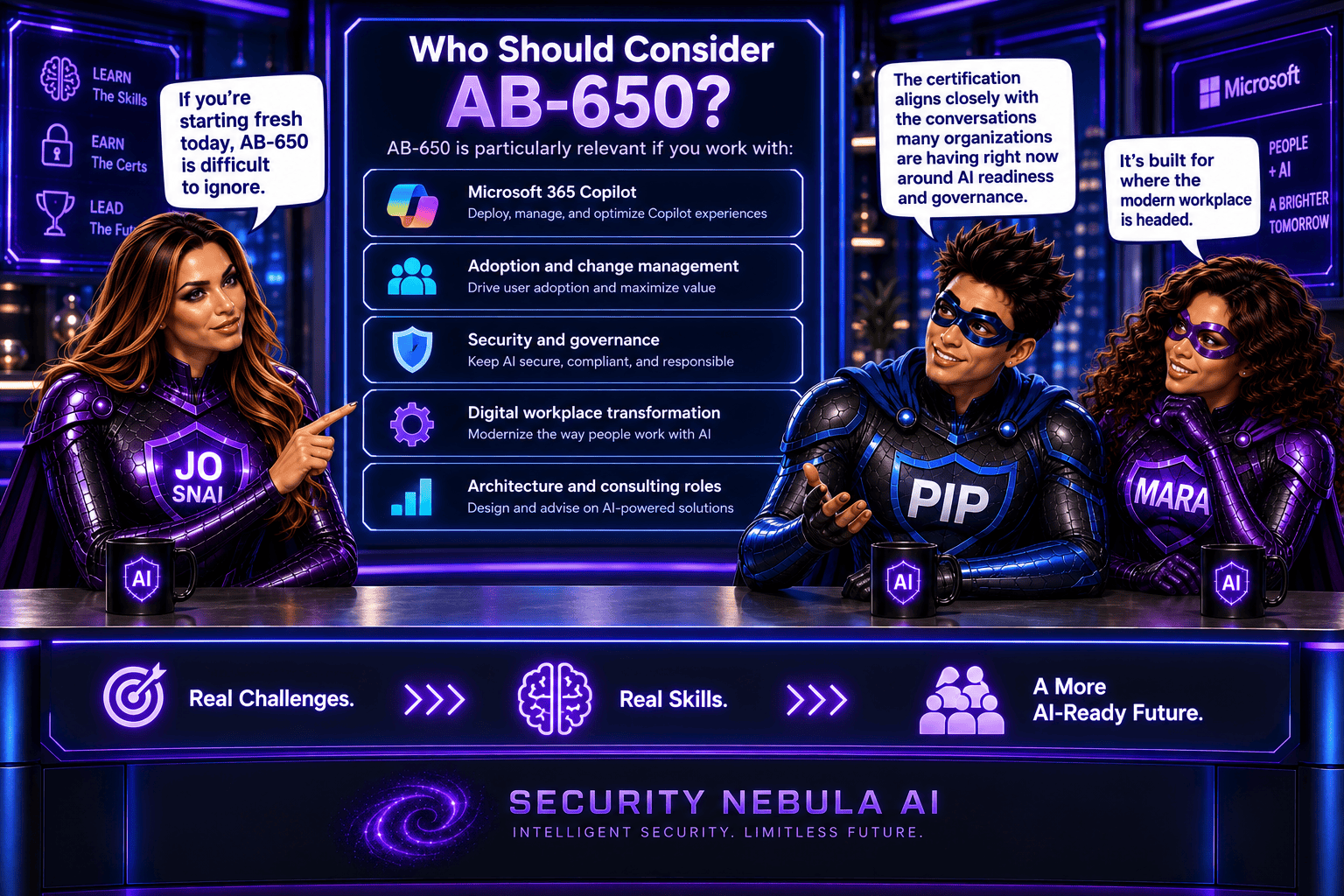
Who Should Consider AB-650?

If you’re starting fresh today, AB-650 is difficult to ignore.

It’s particularly relevant if you work with:

  • Microsoft 365 Copilot
  • Adoption and change management
  • Security and governance
  • Digital workplace transformation
  • Architecture and consulting roles

The certification aligns closely with the conversations many organizations are having right now around AI readiness and governance.

As someone who has spent much of her career in the Microsoft ecosystem, I see this transition as something bigger than an exam retirement.

I see it as a signal.

A signal that the industry is moving toward a future where administration, security, compliance, user experience, and AI are no longer separate disciplines.

They’re becoming interconnected.

A few years ago, administrators managed users.

Today, we’re beginning to manage users and AI assistants.

Tomorrow, we’ll likely be managing entire ecosystems of human and AI collaboration.

And that’s why I believe the move from MS-102 to AB-650 matters.

It’s not just about earning your next certification.

It’s about understanding where our profession is heading.

What do you think? Would you still pursue MS-102 before it retires, or would you jump directly into AB-650 and the AI-first future?